Medical-Grade 3D Anatomy
The translucent body, organ detail, and procedural visualization are at a quality level appropriate for patient education, clinical training, and healthcare marketing.
Generate medical animation videos with AI. Translucent 3D anatomy, an anatomy-constrained script, professional narration, and 4K export for clinicians, patient education, and healthcare brands. Review every video before it reaches a patient.
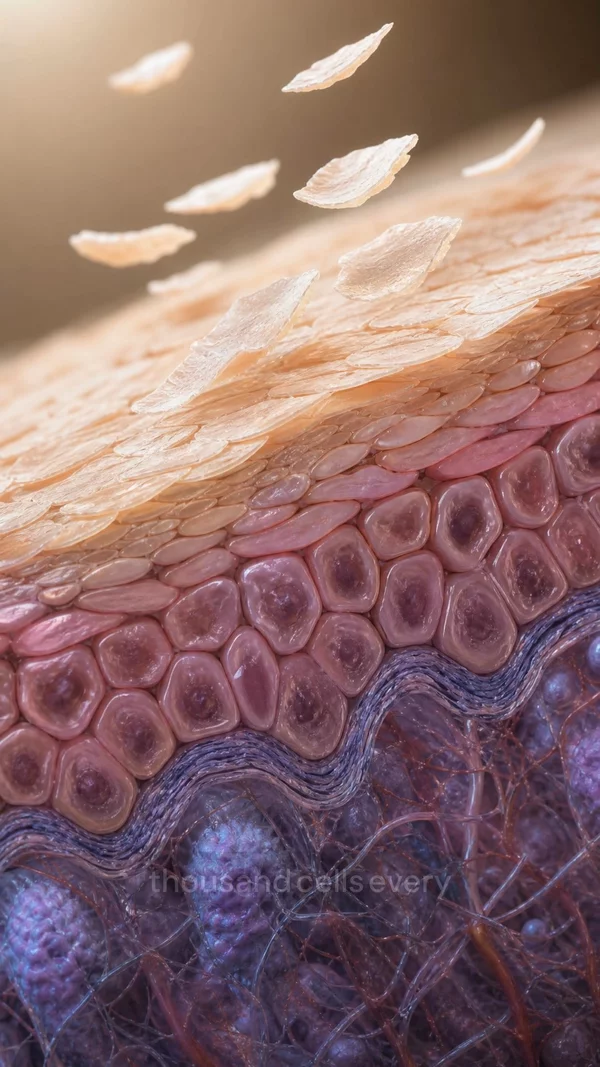
Sample video. Your result will vary based on the style, voice, and settings you choose.
Every one of these was generated from a single prompt. No camera, no editing.
No editing skills. No complex software. Just describe what you want.
Type the medical topic to animate. Procedures (surgery, injection, imaging), conditions (disease progression, organ failure), or treatments (chemotherapy, dialysis, medication mechanism) all work as inputs.
The platform writes a clinical script, animates the relevant anatomy with procedural detail, narrates in a professional tone, and adds captions. The result resembles a medical explainer video.
Review the script and visuals for clinical accuracy with a qualified professional. Refine the prompt if needed and regenerate. Once approved, export in 4K for clinical, educational, or marketing use.
The same subject in every style. Pick one and the create form opens on it. A sixth option, Auto, takes its look from your prompt.
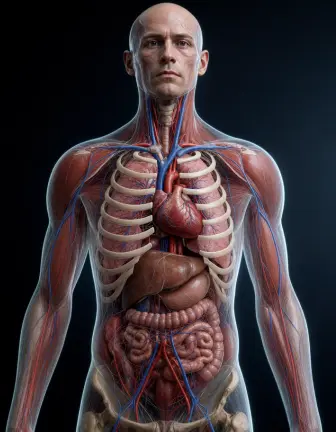 Realistic 3D The textbook render. Best for procedures and organ close-ups.
 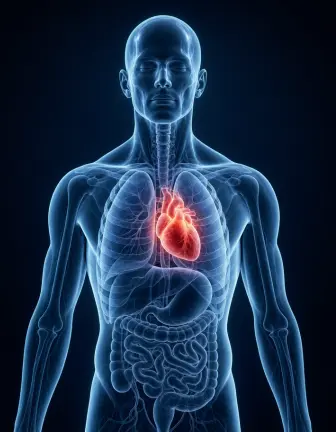 Translucent Body A see-through body with the organs glowing inside. Best for whole-body flows.
 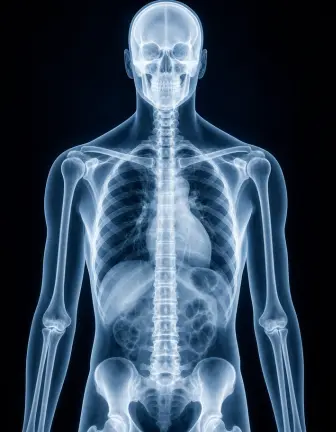 X-Ray Bone-first, high contrast. Best for joints, fractures, and skeletal motion.
 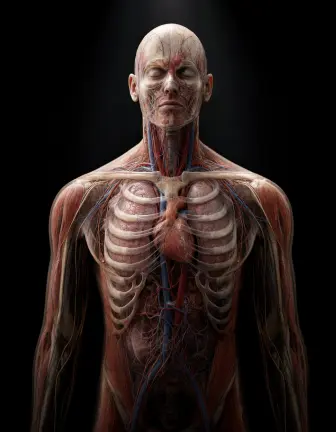 Dark Studio One lit subject on black. Best for a single organ or device on screen.
 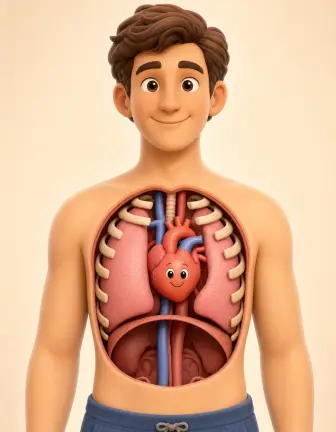 Friendly Cartoon Soft and non-clinical. Best for children, waiting rooms, and first-visit explainers.
 Anatomy is constrained, not imagined. The template holds patient-left against viewer-left, keeps organ landmarks in place, runs one-way flows in one direction, and checks the counts models get wrong: lung lobes, bronchi, fingers. It narrows the gap. It does not close it, so a qualified professional should review any video a patient will see. These videos explain. They are not medical advice.
Professional tools, zero learning curve.
The translucent body, organ detail, and procedural visualization are at a quality level appropriate for patient education, clinical training, and healthcare marketing.
Surgeries, injections, imaging procedures, and treatment mechanisms can be visualized step by step. The AI generates the relevant anatomy and procedural sequence.
The script uses proper medical terminology while staying accessible. Suitable for patient-facing explainers and for medical training material.
Voice options across many languages with a credible, clinical tone. Picks the right register for patient education vs. clinical training.
Higher quality tiers export at up to 4K. Suitable for display on clinical equipment, lobby screens, or projected presentations.
Generate visual explainers for procedures patients are about to undergo. Reduces consent anxiety and improves understanding.
Telehealth onboarding, treatment explainer pages, pre-op walkthroughs, drug mechanism videos. Production-ready content in minutes.
Visual reinforcement for CME modules. The AI handles the visualization while subject-matter experts focus on accuracy and instruction.
Medical animation has historically been a slow and expensive specialty. A 60-second clinical-accurate explainer video from a medical animation studio costs $5,000 to $25,000 and takes 6 to 12 weeks. That price point puts the format out of reach for individual clinicians, smaller healthcare brands, and education creators who could otherwise benefit from visual medical content.
This tool produces medical-grade visual explainers in minutes rather than weeks. The translucent 3D anatomy character, organ-level detail, procedural visualization, and professional narration are generated from a single prompt. Use cases include patient education videos, clinical training material, healthcare brand explainer content, telehealth onboarding, and continuing medical education modules.
A word on accuracy. The tool generates anatomically accurate-looking content based on commonly accepted medical knowledge. For any video used in a clinical setting, in patient education, in continuing medical education, or in marketing healthcare services, a qualified medical professional should review every detail before the video is published. The tool is designed to compress the production timeline, not to replace clinical review.
Four uses cover most of it: patient education, clinician and student training, device and therapy explanation, and healthcare marketing. The common thread is a process that is invisible from the outside and hard to describe in words.
What changed recently is not the quality ceiling. A specialist studio still produces the most accurate animation available. What changed is the floor. A clinic that could never justify a five-figure quote for one explainer can now make twenty, and the constraint moves from budget to review time.
That review is the part worth protecting. AI animation production for healthcare produces a draft, not a signed-off asset. Every organisation doing this well has one rule in common: a qualified professional checks the script and the visuals before anything reaches a patient or a learner.
A maker. It generates the video you describe, in minutes, at platform pricing. It does not model your device from CAD, it does not carry professional indemnity, and it does not sign off on your claims.
The honest split: a studio for the hero asset where exact geometry and accountability are the point, and a medical animation maker for the volume around it. The patient explainer for each service page. The language versions. The training walkthrough. The congress cut. Those are the videos that never get made when every one of them is a quote.
If your need is the viral anatomy short rather than clinical explanation, the skeleton video generator is the better starting point. For patient-facing clinic work, use the patient education video generator.
The tool generates plausible, medical-grade-looking content based on common knowledge. For any clinical use, a qualified professional must review every script line and visual detail before the video reaches a patient or learner.
For patient education, write the prompt in plain language. "How a stent opens a blocked artery" produces a more accessible video than "percutaneous coronary intervention with stent deployment."
Most clinical screens, lobby displays, telehealth interfaces, and CME platforms expect 16:9 horizontal video. Pick that aspect ratio for any medical use case.
A series of cardiac procedure explainers. A series of orthopedic surgery walkthroughs. Bundling builds a clear library that practices and brands can use as a complete patient resource.
Healthcare brands creating patient education content, individual clinicians producing pre-op or post-op explainers for their patients, healthcare marketing teams, medical education creators, and telehealth platforms onboarding new users.
The tool generates content based on commonly accepted medical knowledge and produces visuals that look anatomically and procedurally accurate. For any clinical, patient-facing, or CME use, the script and visuals must be reviewed by a qualified medical professional before publishing.
Yes, with appropriate clinical review. The format is well-suited to patient education: visual, clear, and produced quickly enough to keep a library updated as procedures and protocols change.
It works as the visual layer of CME content. Subject-matter experts should still own the educational accuracy. The AI handles the visualization at a fraction of the time and cost of traditional medical animation.
All major body systems and a wide range of common procedures (cardiac, orthopedic, digestive, urologic, endocrine, neurologic, pulmonary). The AI adapts the visual to whatever the prompt describes.
Yes. Healthcare brands, telehealth services, and medical device companies can use the videos for marketing, brand awareness, and patient acquisition. Verify any clinical claims with appropriate professional review before publishing externally.
Standard medical animations (60 to 90 seconds) generate in five to ten minutes. Longer educational pieces (3 to 5 minutes) take longer depending on the quality tier selected.
Yes. The voice library covers many major medical practice markets including Spanish, French, German, Portuguese, Japanese, and others. Useful for multinational healthcare brands.
Yes. Export 9:16 for Reels, TikTok, and Shorts, and 16:9 for your website or waiting room. The same prompt makes both versions.
Yes. Dental topics like cavities, root canals, gum disease, and implants work well. The AI dental animation video generator is set up for chairside use.
Six pages, one template. Each starts the create form on a different look.
New to the format? Start with how to make anatomy videos with AI.
Create videos for other popular niches
Join 65,020+ creators using AITuber to make professional ai medical animation videos with AI.
No credit card required