Are There MCP Servers for Video Generation?
Yes. Video generation MCP servers come in three kinds: model wrappers that return raw clips, editing servers, and full pipelines that return a finished video.

Yes. There are three kinds: model wrappers that return raw clips, editing servers that change existing video, and full pipelines that return a finished video.
Which kind you pick matters more than which brand you pick. Most servers people find are model wrappers, and a wrapper hands back a silent clip of 5 to 15 seconds. If you expected something you could post, that is the gap.
Key takeaways
| Question | Answer |
|---|---|
| Do MCP servers for video exist? | Yes, and there are many |
| How many kinds are there? | Three: model wrappers, editing servers, full pipelines |
| What do most of them return? | A silent clip, usually 5 to 15 seconds |
| Which kind returns a postable video? | A full pipeline |
| Do you need an API key? | Depends. Hosted servers usually use sign-in instead |
The three kinds of video generation MCP server
Every video MCP server sits in one of three groups. The groups differ by where they stop.
1. Model wrappers
A model wrapper puts one company’s video models behind a tool call. You describe a shot, the model runs, and a clip comes back.
Examples include Higgsfield, fal.ai, Replicate, Kling, and Runway. This is by far the biggest group.
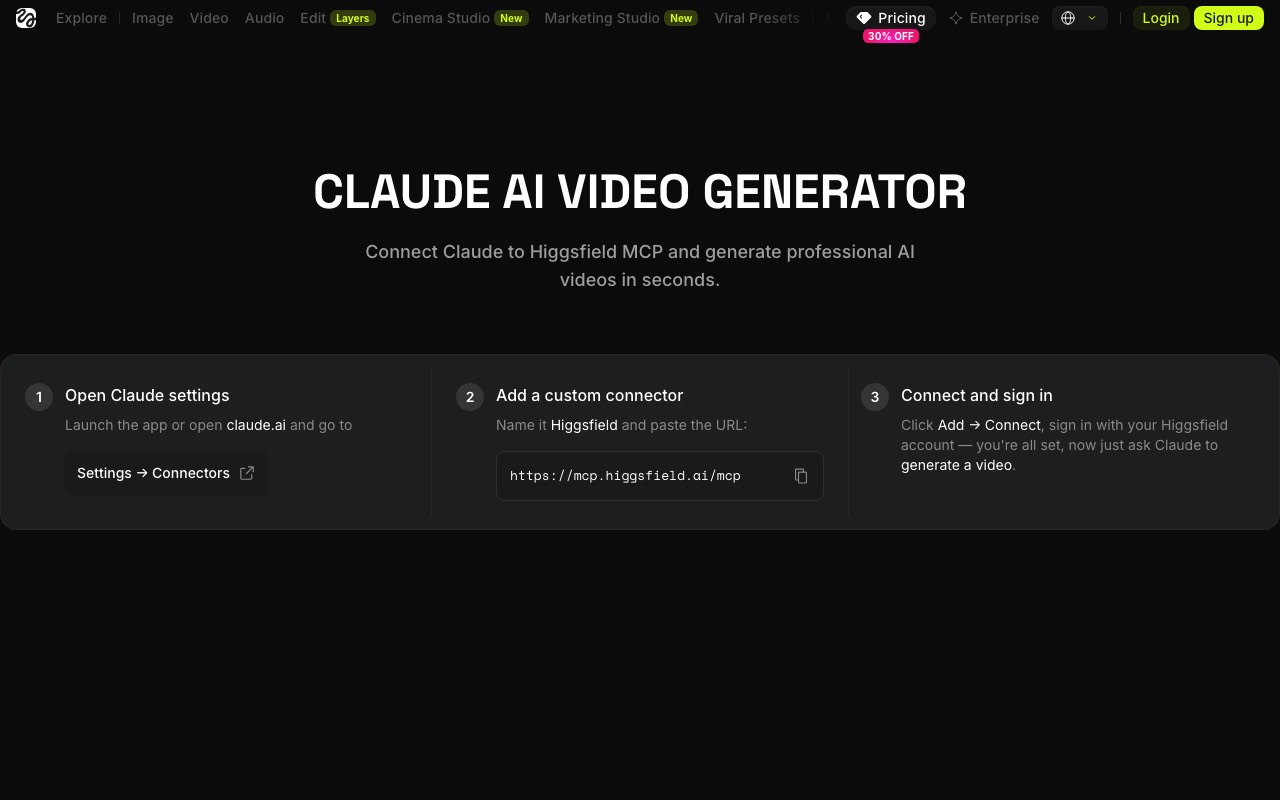
They are good at what they do. The clip usually looks great. It is also silent, short, and unedited. Our Higgsfield MCP guide walks through one wrapper in detail, including the limits.
2. Editing and render servers
These do not invent a video. They execute something you defined.
ComfyUI runs a node workflow you built. Remotion renders video from React code. Both give you exact control, and both assume you already know what you want.

This group is powerful and slow to start. It suits developers and technical artists, not someone who wants a video tonight.
3. Full pipelines
A full pipeline runs the whole job. It writes the script, picks a voice, generates the visuals, adds captions, renders an MP4, and in some cases uploads it to your channel.
AITuber works this way. You ask for a video about a topic, and a finished video comes back.
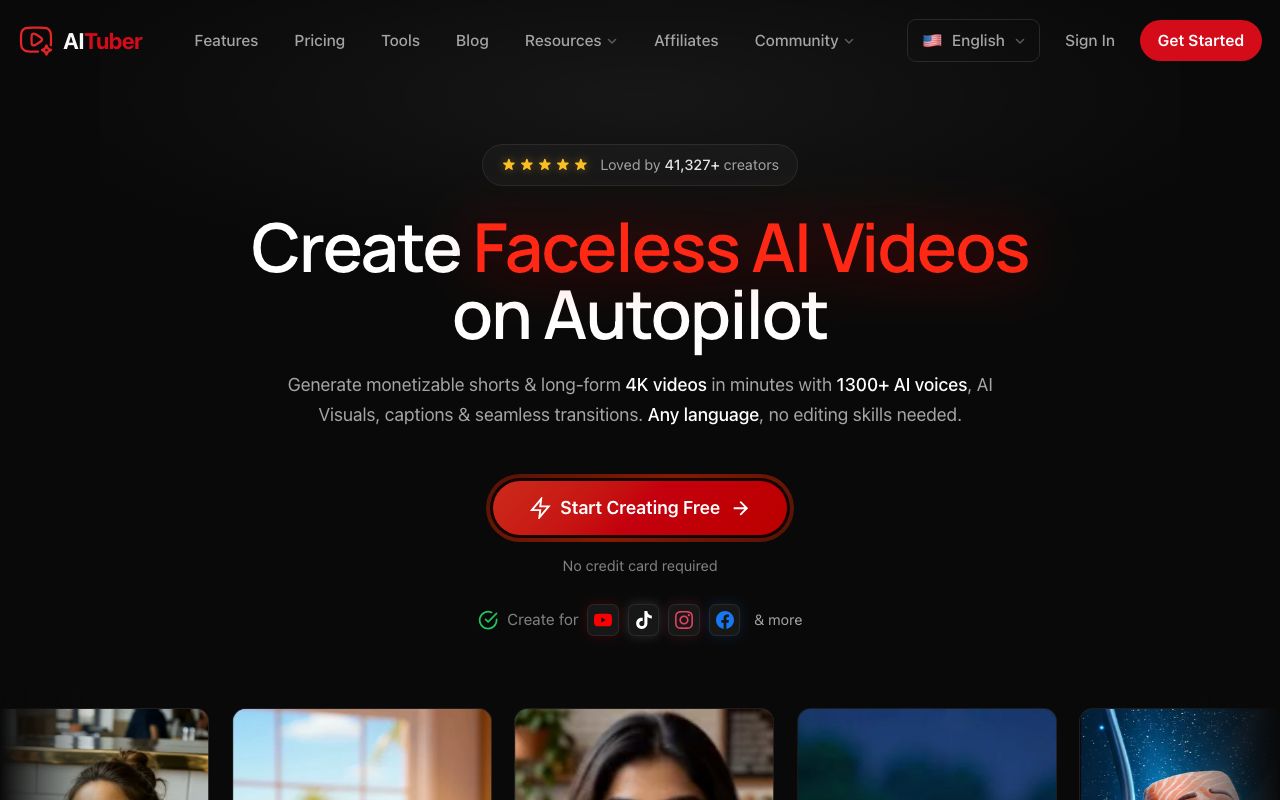
This group is small. Most servers stop at the clip.
What each kind hands back
A publishable video takes six steps: script, voice, visuals, captions, MP4, publish. Here is where each group stops.
| Kind | Example servers | What you get | What is missing |
|---|---|---|---|
| Model wrapper | Higgsfield, fal.ai, Replicate, Kling, Runway | Silent clip, 5 to 15 seconds | Script, voice, captions, edit, upload |
| Editing or render | ComfyUI, Remotion | Whatever your workflow outputs | The idea and the setup work |
| Full pipeline | AITuber | Finished MP4 with voice and captions | Fine control over each shot |
How to tell which kind you are looking at
You do not need to install anything to work this out. Read the server’s own description and ask three questions.
- Does it mention a voice or narration? If not, it is a wrapper. Voice is the clearest tell.
- Does it name a maximum clip length? A 5, 10, or 15 second cap means one generation, not a finished video.
- Does it mention publishing or uploading? Only pipelines do. Wrappers stop at the file.
If the description is a list of model names, it is a wrapper. If it is a list of production steps, it is a pipeline.
Do you need an API key?
It depends on how the server is hosted, not on what it does.
Hosted servers usually use sign-in. You paste one URL into your assistant, log in to your account in a browser window, and your plan credits are used. Higgsfield and AITuber both work this way.
Self-hosted and community servers usually need a key. You get an API key from the vendor, store it in a config file, and the server calls the vendor on your behalf. This is common for community wrappers on GitHub.
Hosted with sign-in is safer and faster. There is no key sitting in a config file, and nothing breaks when the vendor rotates its API.
Which kind should you use
Pick a model wrapper if you want one good looking shot, you care which model runs it, and editing is already part of your job.
Pick an editing or render server if you are technical, you want exact control, and you are happy to build a workflow first.
Pick a full pipeline if you publish regularly and want the video to arrive ready to post, with narration and captions already on it.
For most people asking this question, the honest answer is a pipeline. The reason the question comes up at all is usually that someone tried a wrapper and got back a silent five second clip.
If you want the full field ranked, see our guide to the best MCP servers for AI video generation.
Frequently Asked Questions
Basics
Are there MCP servers for video generation?
Yes. There are many, and they fall into three groups: model wrappers that return raw clips, editing or render servers that execute a workflow you defined, and full pipelines that return a finished video with voice and captions.
What is a video generation MCP server?
It is a bridge between an AI assistant and a video tool. MCP stands for Model Context Protocol, an open standard from Anthropic. Once a server is connected, your assistant can call its tools and make video from inside a normal conversation.
Can Claude generate videos?
Not on its own. Claude does not have a built-in video model. Connect a video MCP server and Claude can generate video through it. What comes back depends entirely on which kind of server you connected. Setting up AITuber in Claude takes about a minute.
Practical
Do I need an API key to use a video MCP server?
Not always. Hosted servers usually ask you to sign in with your account instead, so there is no key to store. Community and self-hosted servers normally do need an API key from the underlying vendor.
How long can the videos be?
Model wrappers usually cap a single generation at 5 to 15 seconds. Full pipelines produce videos that run minutes, because they stitch multiple clips to a narration track.
Is there a free way to test one?
Usually yes. Several servers include free credits or a cheap one-time pass. AITuber gives new accounts 100 free credits with no card.
Comparisons
What is the difference between an MCP server and a video API?
An MCP server is for chatting. You connect it once and talk to your assistant in plain words. An API is for code you write yourself, with keys and requests you control. Our roundup of the best AI video APIs covers the API side.
Which video MCP server returns a video I can actually post?
A full pipeline. It writes the script, adds the voice, generates the visuals, syncs the captions, and renders an MP4. AITuber’s MCP server can also publish it to YouTube, TikTok, Instagram, Facebook, Threads, and X.
How we researched this: the category map comes from reading each server’s own documentation and setup pages, checked in August 2026, plus hands-on use of the servers in Claude. MCP ecosystem figures are Anthropic’s published numbers. AITuber is a product we build, so we have flagged every comparison and kept the details of other servers accurate and current. Servers and their limits change often; check each vendor’s docs for the latest.