Best AI Video APIs for Developers (2026)
The best AI video APIs in 2026, with live pricing per finished video. Eight developer APIs compared, from one-call MP4 to raw model endpoints.

The best AI video API depends on one question: do you want a finished video back, or raw footage? Want a finished MP4 from one call, with a script, a voice, and captions? The AITuber API is the cheapest of the eight we tested, at about $0.49 per minute. Want raw clips to edit yourself? Replicate and the Gemini API give you the widest model choice. Every price below was read off the vendor’s live pricing or docs page on July 30, 2026.
Key takeaways
| API | What one call returns | Cost of 60 seconds | Entry price |
|---|---|---|---|
| AITuber | Finished MP4 with voice and captions | About $0.49 | Free, 100 credits |
| ShortGenius | Finished video, ready to post | About $0.83 | $39/mo |
| Creatify | Finished ad with an avatar | $1.98 | $99/mo for API access |
| HeyGen | Avatar speaking your script | $3.00 | Top up from $5 |
| Replicate | An 8-second silent clip | $5.40 for the clips | No minimum |
Costs assume a 60-second video. The finished-video numbers include the script, the voiceover, and the captions. The Replicate number is for raw footage only, and you still have to write, voice, caption, and stitch it.
The two kinds of AI video API
Almost every AI video API falls into one of two groups. Picking the wrong group is the expensive mistake, not picking the wrong vendor.
Model APIs give you a generation endpoint. You send a prompt, you get back a short silent clip. Replicate, the Gemini API, and the Runway API work this way. They are flexible and they are cheap per second. They also leave you the whole pipeline.
Finished-video APIs give you a production endpoint. You send a topic or a script, and you get back a rendered MP4 with narration and captions burned in. AITuber, ShortGenius, Videnly, Creatify, and HeyGen work this way.
If you are building a video product, you probably want a finished-video API. If you are building a video tool, you probably want a model API. AITuber sits between the two. Our AI video generation API runs the whole pipeline, and you still pick the visual style and the voice per call.
What 60 seconds of video actually costs
Per-second pricing hides the real number. Here is the same job, a 60-second video, priced on each API’s published rates.
The outlined bars are not really comparable to the solid ones. A $5.40 Replicate run gives you eight silent clips. You still owe your users a script, a voice, captions, and a stitched file.
What to look for in an AI video API
- What one call returns. A rendered MP4 or a clip. This decides how much you build.
- Real cost per finished minute. Convert credits and per-second rates into one number before you compare.
- How failures are billed. Generation fails sometimes. Ask whether you pay for the failure.
- Clip length limits. Model APIs cap a single call at a few seconds. Check before you promise a 60-second feature.
- Credit expiry. Monthly credits that reset punish spiky workloads. Credits that roll over do not.
- Deprecation policy. Models get sunset. Find out how much notice you get and whether there is a router.
- MCP and agent support. If your users are AI agents, an MCP server saves you writing a tool layer.
The best AI video APIs
1. AITuber API
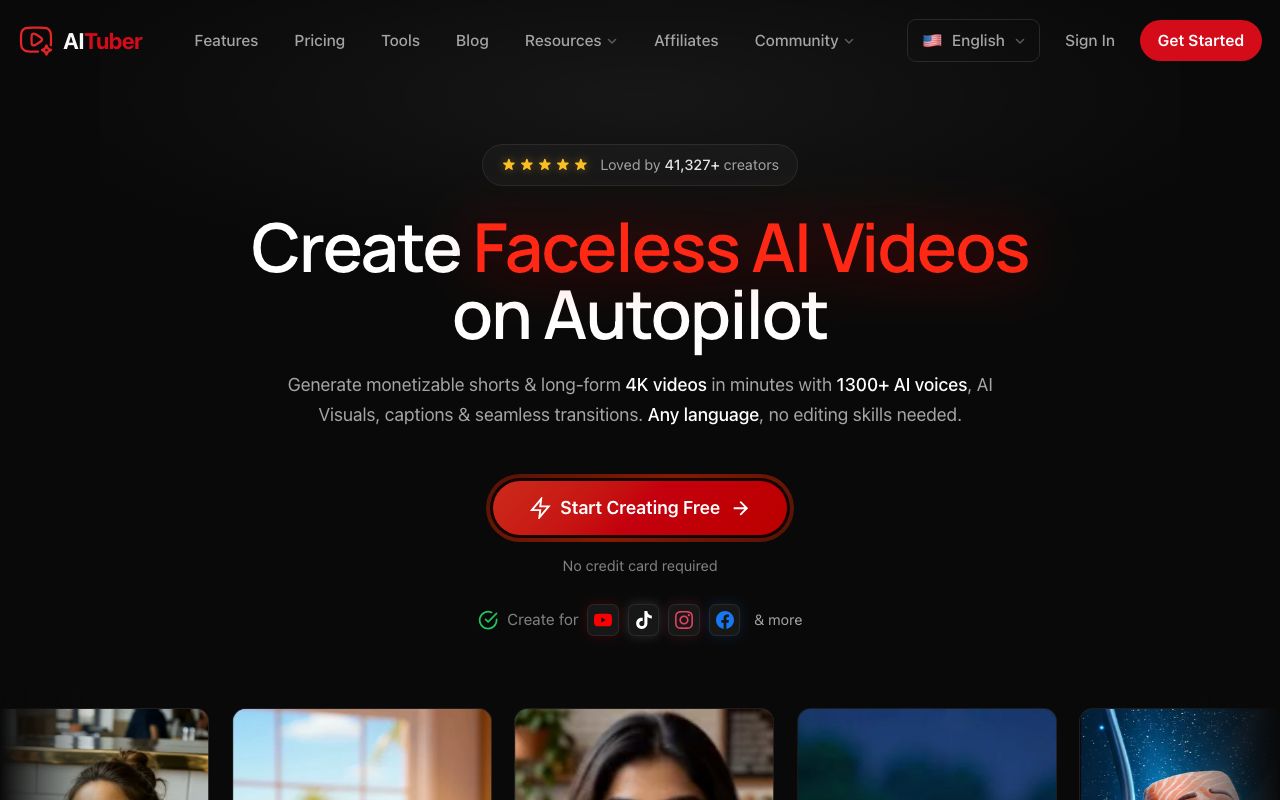
AITuber is the pick when you want a finished video from one call and you do not want to run a render pipeline. You send a topic or a script, and you poll for a rendered MP4 with visuals, narration, and word-synced captions. It is the cheapest finished-video API of the eight here, and failed generations refund your credits automatically. The same account also exposes an MCP server and agent skills, so your users’ AI assistants can make videos without you writing a tool layer.
curl -X POST https://app.aituber.app/api/v1/videos/generate \
  -H "Authorization: Bearer YOUR_API_KEY" \
  -H "Content-Type: application/json" \
  -d '{
    "script": "5 mind-blowing facts about black holes",
    "inputType": "idea",
    "expectedDurationSeconds": 60,
    "aspectRatio": "9:16"
  }'
Key features
- Send a topic and get a script, or send your own script for exact control
- 1,300+ AI voices, with a preview URL for each one
- 27+ visual styles and 5 video types, including stock footage and templates
- 9:16, 16:9, and 1:1 in one API, so one integration covers every platform
- 13 caption styles, with position and on/off control
- Publishing endpoints for YouTube, TikTok, and Instagram
- Hosted MCP server at
mcp.aituber.appplus a SKILL.md for coding agents
Pros
- Cheapest finished minute here at about $0.49 on the $49 plan
- Credits are refunded automatically when a generation fails
- Credits never expire, so a quiet month is not wasted money
- Every voice, style, and template is on every paid plan, including the $29 one
- Free tier of 100 credits with no card
Cons
- No talking-head avatar, so a spokesperson video needs HeyGen instead
- You pick from our model lineup rather than any model on the internet
- Generation is asynchronous, so you have to poll rather than block on one call
Pricing: Free to start with 100 credits. Paid plans are Creator $29/mo (1,800 credits), Pro $49/mo (4,000), Studio $89/mo (8,000), Agency $149/mo (15,000), Business $349/mo (35,000), and Enterprise $499/mo (50,000). A 60-second video at basic image quality costs about 30 to 50 credits, so roughly $0.37 to $0.61 on Pro. See the full pricing.
Best for: teams shipping a video feature who want one call, one bill, and no render pipeline.
2. ShortGenius API
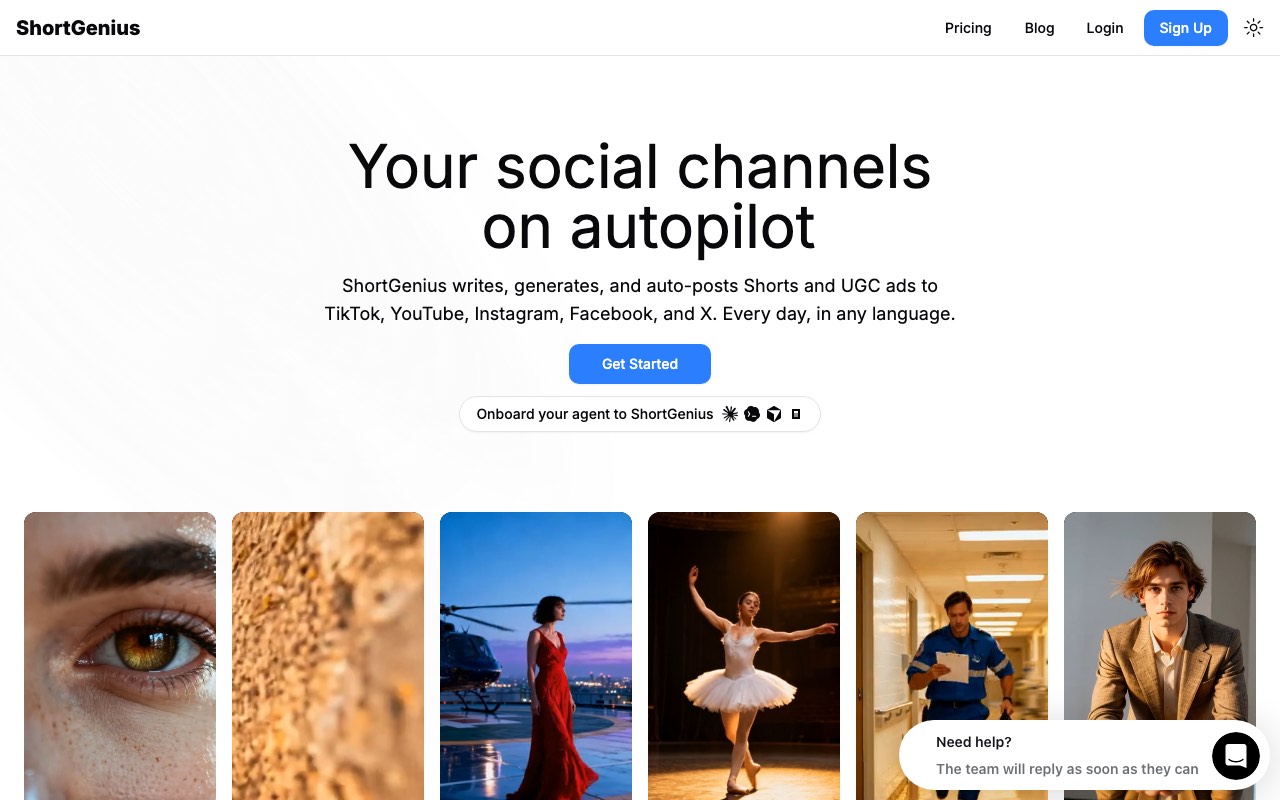
ShortGenius has the best developer experience in this group. Its portal at app.shortgenius.com/developers is public, so you can read the docs before you sign up. It ships a TypeScript SDK, a Python SDK, an MCP server, and request logs. It also publishes llms.txt and llms-full.txt, so you can feed the docs straight to a coding agent. Very few video vendors do all of that.
Key features
- Public developer portal with docs, API keys, and request logs
- Official TypeScript and Python SDKs
- MCP server for connecting AI clients
llms.txtandllms-full.txtso agents can read the docs- Cross-posting to TikTok, YouTube, X, Facebook, and Instagram
- 3,000+ voices and a wide model lineup built in
Pros
- Docs are readable without an account, which is rare here
- Two official SDKs plus MCP covers most integration styles
- Request logs in the dashboard make debugging much faster
- The lowest paid entry point of the finished-video APIs at $39/mo
Cons
- Credits are coarse: one credit is roughly one video, so short clips cost the same as long ones
- No published per-second or per-second-of-output rate to model against
- Little independent review data exists for the API specifically
Pricing: Standard $39/mo (30 credits), Pro $69/mo (60), Growth $99/mo (120), and Scale $249/mo (300). Yearly billing is advertised as 6 or more months free. On the Growth plan that works out to about $0.83 per video.
Best for: developers who want to read the docs, install an SDK, and ship the same afternoon.
3. Videnly API
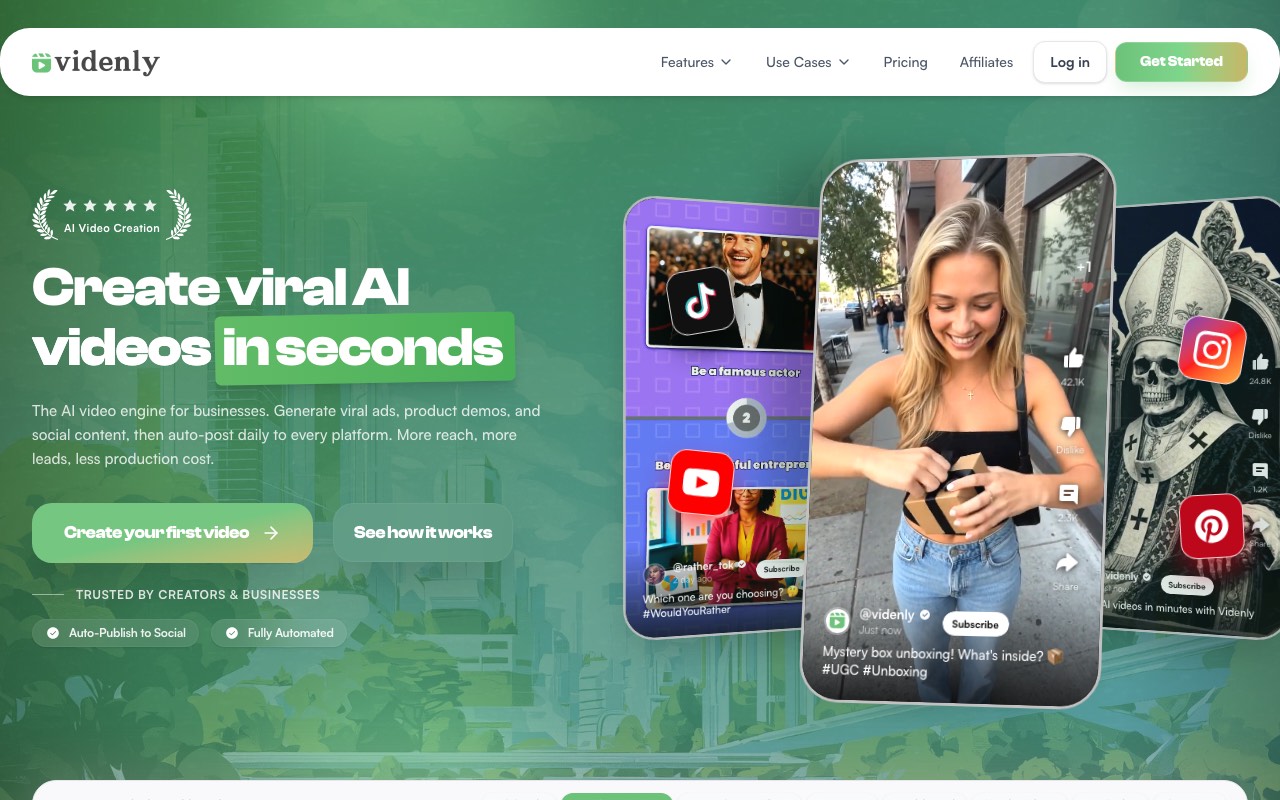
Videnly generates faceless videos, Reddit story videos, and UGC ads, then auto-publishes them to connected YouTube and TikTok accounts. The API is real, but it is gated. You need the Premium plan to get it, which makes Videnly the most expensive API here to simply switch on.
Key features
- Faceless, Reddit story, “Would You Rather”, and UGC ad formats
- Auto-publishing to YouTube and TikTok from connected accounts
- Video projects that separate channels, niches, and topics
- Text to speech powered by ElevenLabs
- Zapier integration on Premium alongside the API
Pros
- Publishing is built in, so scheduling is one less service to run
- Project structure fits agencies running many channels
- Custom trained models are available on the higher plans
Cons
- API access starts at Premium, so the entry cost is $99/mo
- Credits reset every month and do not roll over
- The credits-per-video ratio is published as a wide range, which makes cost modelling hard
- No public API documentation to read before you buy
Pricing: Starter $29/mo (3,000 credits), Growth $49/mo (6,000), Premium $99/mo (12,000, and the first tier with full API access), plus a Business tier at 30,000 credits. Yearly billing drops Premium to $82/mo, billed as $984 a year. Videnly lists 100 to 300 videos on the Premium allowance, which is $0.33 to $0.99 per video.
Best for: agencies already running many social channels who want the API as an add-on, not a starting point.
4. Creatify API
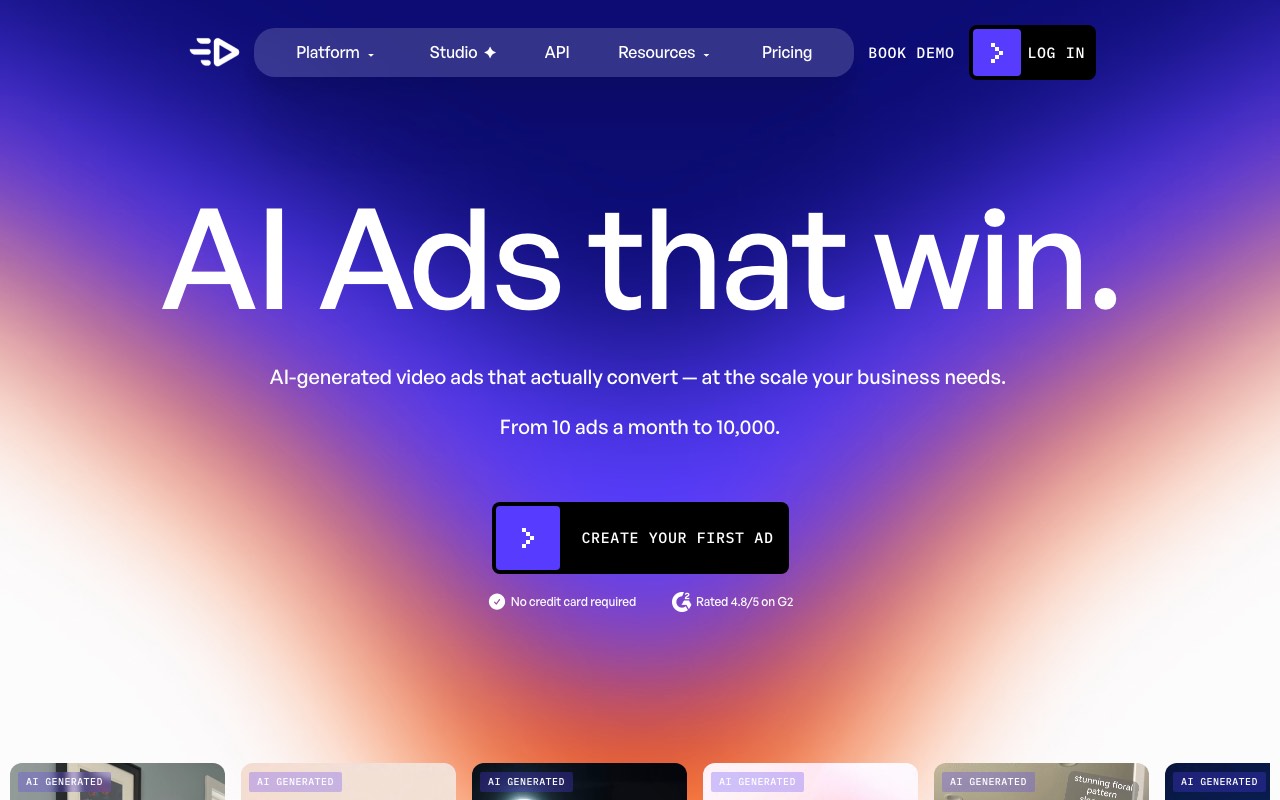
Creatify is built for commerce video. Its headline endpoint takes a product URL and returns an ad with an AI actor reading a script it wrote from the page. It has a separate API price list from its platform plans, which is unusually clear, and it publishes a credit cost for every endpoint.
Key features
- URL to Video: send a product link, get a finished ad
- 1,500+ UGC avatars, plus the Aurora avatar model
- Product Video endpoint for studio-style shots from a product image
- Custom templates so every generated video stays on brand
- A documented credit cost for each individual endpoint
- SOC 2 Type II compliance
Pros
- The clearest published API price list of any vendor here
- URL to Video removes the script-writing step entirely for ecommerce
- Enterprise security posture is stronger than the rest of this group
- Aurora Fast is only 0.5 credits per second for longer avatar output
Cons
- API plans start at $99/mo, and they are separate from platform plans
- Billing rounds to 30-second increments on the core endpoints, so a 35-second video bills as 60
- Built for ads, so general content video is not the target
Pricing: API Starter $99/mo (500 credits) and API Pro $299/mo (2,000 credits), with Enterprise on request. URL to Video and AI Avatar cost 5 credits per 30 seconds, so a 60-second ad is 10 credits, or $1.98 on API Starter. Aurora is 1 credit per second and Aurora Fast is 0.5.
Best for: ecommerce and performance marketing teams generating product ads at volume.
5. HeyGen API
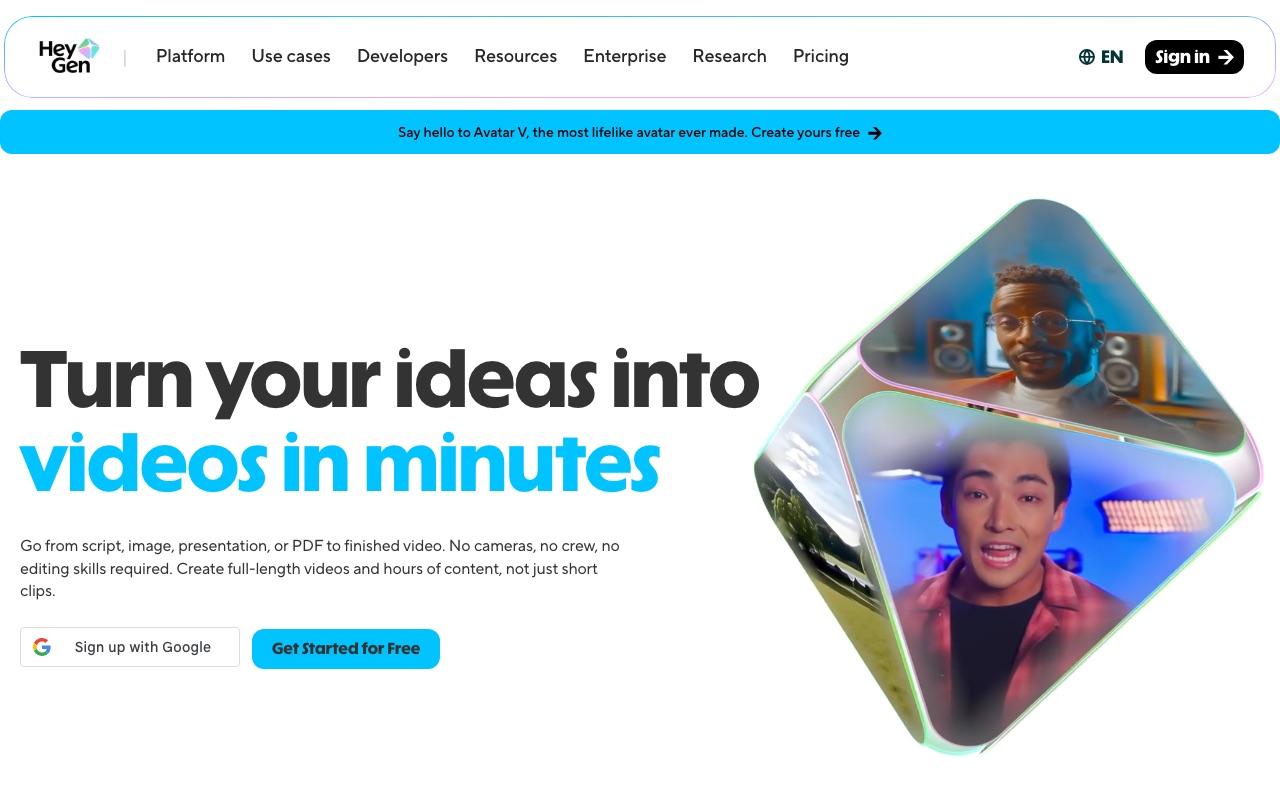
HeyGen is the avatar specialist. If your feature is a person on camera saying something, this is the API. It is also the only one here with true pay-as-you-go pricing: you top up a USD wallet from $5 and there is no subscription. We cover the wider product in our HeyGen alternatives guide.
Key features
- Avatar III, IV, and V engines at different quality and price points
- Video Agent endpoint that turns one prompt into a finished avatar video
- Video translation and dubbing with lip-sync preserved
- Digital twin and photo avatar creation, billed per call
- MCP server with OAuth, plus a Skills integration for coding agents
- AI clipping to cut long video into shorts
Pros
- No subscription at all, and you can start with a $5 top-up
- Per-second rates are published for every engine and mode
- The widest range of quality tiers, from $0.0167 to $0.0667 per second
- Three integration paths: MCP, Skills, and direct API
Cons
- Avatar video only, so there is no faceless or B-roll format
- You supply the script, so a content pipeline needs another service
- The cheapest good-quality tier is still 2 to 6 times AITuber per minute
Pricing: Pay as you go from a $5 top-up. Avatar IV photo avatars are $0.05 per second, which is $3.00 a minute. Avatar III digital twins are $0.0167 per second, or $1.00 a minute. Video Agent prompt-to-video is $0.0333 per second. Cinematic Avatar is a flat $7.00 per video.
Best for: products that need a person on camera, in many languages, without a studio.
6. Replicate
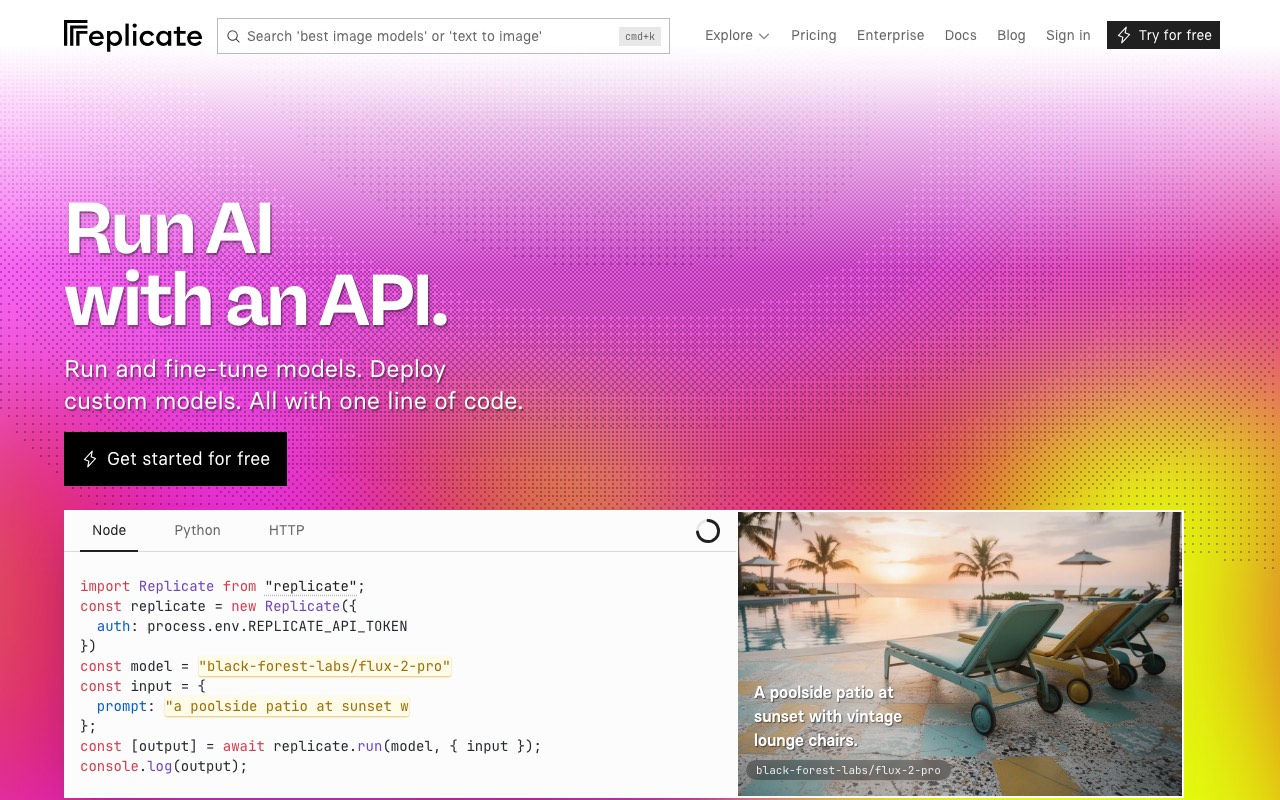
Replicate is a marketplace, not a video product. It hosts thousands of open and proprietary models behind one consistent API, and video models are just one category. Pick it when you want model choice and you are happy to build the rest. There is no subscription at all.
Key features
- Thousands of models behind one API and one auth token
- Video models billed per second of output video
- Hardware billing for models that charge by run time instead
- Deploy your own models with Cog, their open-source packaging tool
- Cost estimates shown on every model page before you run it
- Volume discounts and enterprise contracts for heavy use
Pros
- The widest model choice of anything in this guide
- No subscription and no minimum spend
- Swapping models is a string change, not a rewrite
- Custom and fine-tuned models run on the same API surface
Cons
- You get a silent clip, so script, voice, captions, and stitching are all yours
- Per-second video pricing is 2 to 12 times a finished-video API per minute
- Private models bill for idle time as well as active time
- Model availability moves with the community, so pin your versions
Pricing: Pay per use with no plan. Video models are billed per second of output. The examples on Replicate’s own pricing page run from $0.09 per second for Wan 2.1 image-to-video at 480p to $0.25 at 720p. Hardware-billed models run from $0.000025 per second on a small CPU to $0.001525 per second on an H100, which is $5.49 an hour.
Best for: teams building their own video pipeline who want to swap models freely.
7. Runway API
Runway sells its own models plus a curated set of others through one credit-based API. Credits are a flat $0.01 each, which makes the per-second maths easy. Its Model Router is a genuinely useful idea: you call the router instead of a model name, and deprecations stop being your problem.
Key features
- Gen-4 and Gen-4.5 video models, plus hosted Veo, Seedance, and Gemini models
- Model Routers that pick a model for you and report the realized cost
- Image generation, upscaling, and audio in the same credit system
- Recipes for common jobs like product ads and multi-shot video
- Act-Two for performance capture and real-time avatars
Pros
- Flat $0.01 credits make cost modelling trivial
- Model Routers reduce the pain of deprecations
- One API covers video, image, upscale, and audio
- Gen-4 Turbo is cheap at 5 credits per second
Cons
- Clips are short: the official quickstart generates 5 seconds
- Deprecations are frequent, and two models sunset on July 30, 2026
- Still raw footage, so you build script, voice, and captions yourself
- Premium models get expensive fast at 36 to 150 credits per second
Pricing: Credits cost $0.01 each. Gen-4 Turbo is 5 credits per second, which is $0.05 per second or $3.00 a minute. Gen-4.5 is 12 credits per second. Veo 3.1 with audio is 40 credits per second through Runway, and Seedance 2 at 4K is 150.
Best for: teams that want many models behind one bill and a router to absorb deprecations.
8. Google Veo (Gemini API)
Veo 3.1 is the quality benchmark for short clips, and it generates audio natively rather than bolting it on. You reach it through the Gemini API. Note that Google now recommends Gemini Omni Flash as the default video model, and points to Veo for scene extension, last-frame control, and legacy pipelines.
Key features
- Native audio generation inside the video model
- 720p, 1080p, and 4K output
- Scene extension: add 7 seconds at a time, up to 20 times
- Frame-specific generation and image-based direction
- Three tiers: Standard, Fast, and Lite
Pros
- Best-in-class clip quality with sound in one call
- Lite at $0.05 per second is competitive with any model API
- Extension lets you reach around 141 seconds from one starting clip
- You only pay when a video is generated successfully
Cons
- Clips are 8 seconds, so a 60-second video is 8 calls or a chain of extensions
- No free tier for video generation at all
- Standard with audio is $0.40 per second, which is $24.00 a minute
- Google deprecates aggressively: Veo 2 and Veo 3 shut down on June 30, 2026
Pricing: Paid tier only. Veo 3.1 Standard with audio is $0.40 per second at 720p and 1080p, and $0.60 at 4K. Veo 3.1 Fast is $0.10 at 720p, $0.12 at 1080p, and $0.30 at 4K. Veo 3.1 Lite is $0.05 at 720p and $0.08 at 1080p.
Best for: teams who need the highest clip quality and will build the pipeline around it.
Quick comparison of all eight APIs
| API | Type | One call returns | 60 seconds costs | Entry price | MCP server |
|---|---|---|---|---|---|
| AITuber | Finished video | MP4 with voice and captions | About $0.49 | Free | Yes |
| ShortGenius | Finished video | Video ready to post | About $0.83 | $39/mo | Yes |
| Videnly | Finished video | Video, auto-published | $0.33 to $0.99 | $99/mo for API | No |
| Creatify | Finished video | Ad with an AI actor | $1.98 | $99/mo | No |
| HeyGen | Finished video | Avatar reading your script | $3.00 | $5 top-up | Yes |
| Runway | Model | A 5-second clip | $3.00 in clips | No minimum | No |
| Replicate | Model | An output clip | $5.40 in clips | No minimum | No |
| Google Veo | Model | An 8-second clip with audio | $6.00 in clips | No free tier | No |
Model-API rows are the cost of the raw footage only. Add your own script, voice, captions, and stitching on top.
Model churn is the real cost
Nobody budgets for this, and it is the line item that hurts. Video models get deprecated faster than almost anything else in AI.
Runway deprecated Gen-3 Alpha Turbo and Gen-4 Aleph, and both sunset on July 30, 2026. Its hosted Veo 3 follows on August 4, 2026. Google shut down Veo 2 and Veo 3 on the Gemini API on June 30, 2026. OpenAI retired the Sora API last year, which we covered in our guide to the Sora shutdown.
If you call a model name directly, every one of those is a migration. Two things reduce the pain. A router, like Runway’s, lets you name a capability instead of a model. A finished-video API does the same thing implicitly: we swap the underlying model and your POST /videos/generate call keeps working.
How to choose the right AI video API
Are you shipping a video feature or building a video tool? A feature wants a finished-video API. A tool wants a model API.
Is your workload spiky? Then avoid credits that reset monthly. AITuber credits never expire. Videnly credits do not roll over.
Do you need a face on screen? HeyGen, or Creatify if the face is selling a product. Nothing else here does talking heads well.
Do your users talk to an AI assistant? Pick a vendor with an MCP server. AITuber, ShortGenius, and HeyGen have one. That saves you writing and maintaining a tool layer.
How much churn can you absorb? If the answer is none, use a finished-video API or a router. Direct model calls mean you own every deprecation.
Use-case cheat sheet
| You are building | Pick | Why |
|---|---|---|
| A “turn this post into a video” button | AITuber | One call, finished MP4, cheapest per minute |
| A faceless channel automation tool | AITuber or ShortGenius | Both generate and publish |
| Product ads from a store URL | Creatify | URL to Video writes the script from the page |
| Localized spokesperson videos | HeyGen | Translation and dubbing keep lip sync |
| A creative tool with model choice | Replicate | Thousands of models, one auth token |
| The highest-quality 8-second clip | Google Veo 3.1 | Native audio, best clip fidelity |
| A video feature inside an AI assistant | AITuber MCP | One URL, no tool layer to write |
| An internal tool on a tiny budget | AITuber free tier | 100 credits, no card |
| Many client channels at once | Videnly | Projects and auto-publishing per channel |
| A pipeline you expect to rewrite often | Runway | Model Routers absorb deprecations |
Frequently Asked Questions
Basics
What is an AI video API?
An AI video API is an HTTP endpoint that generates video from text. There are two kinds. A model API returns a short silent clip from a prompt. A finished-video API returns a rendered MP4 with narration and captions already applied. The AITuber, ShortGenius, Videnly, Creatify, and HeyGen APIs are the finished-video kind. Replicate, Runway, and Google Veo are the model kind.
Which AI video API is cheapest?
For a finished 60-second video with a voiceover and captions, AITuber is cheapest at about $0.49 on the $49 Pro plan. ShortGenius is next at about $0.83 per video on its $99 Growth plan. Model APIs look cheaper per second but cost more per finished minute, because a $5.40 Replicate run still gives you silent clips.
Do any AI video APIs have a free tier?
AITuber gives 100 free credits with no card, which is enough for at least one video. Replicate and Runway have no minimum spend, so you can start with a very small amount. HeyGen starts at a $5 top-up. Google charges for all video generation on the Gemini API and has no free tier for it.
Can I generate a 60-second video in a single API call?
With a finished-video API, yes. AITuber, ShortGenius, Creatify, and HeyGen all accept a duration and return one file. With a model API, no. Veo 3.1 generates 8 seconds at a time and Runway’s quickstart generates 5, so a minute means several calls plus your own stitching.
Pricing and billing
How do credits work across these APIs?
Every vendor uses a different unit. Runway credits are a flat $0.01 each. Creatify charges 5 credits per 30 seconds of avatar video. ShortGenius credits are roughly one per video. AITuber charges about 30 to 50 credits for a 60-second video. Always convert to cost per finished minute before comparing.
Do I pay for failed generations?
It depends on the vendor, and this is worth checking before you build. AITuber refunds credits automatically when a generation fails. Google only charges when a Veo video is generated successfully. HeyGen refunds a filler-word-removal run that changes nothing. Assume you pay unless the docs say otherwise.
Do unused credits roll over?
On AITuber, credits never expire while your plan is active. Videnly states plainly that credits reset monthly and do not roll over. Replicate and Runway have no monthly allowance to lose, since you buy usage directly.
Which API is cheapest per second of raw footage?
Runway Gen-4 Turbo at $0.05 per second and Veo 3.1 Lite at $0.05 per second at 720p are the cheapest here. Replicate’s Wan 2.1 image-to-video is $0.09 per second at 480p. Remember that raw footage is not a finished video.
Building with them
Which AI video APIs have an MCP server?
AITuber, ShortGenius, and HeyGen all publish one. AITuber hosts a single URL at mcp.aituber.app that works in Claude, Cursor, Codex, and any other MCP client. You sign in with OAuth or pass an API key header. An MCP server matters when your users are AI agents, because it saves you writing a tool layer yourself.
How do I handle model deprecations?
Two ways. Use a router, like Runway’s Model Routers, so you name a capability rather than a model. Or use a finished-video API, where the vendor swaps the model underneath and your endpoint stays the same. On a marketplace like Replicate, pin exact model versions so a community update cannot change your output.
Can I publish directly to YouTube or TikTok from an API?
AITuber, ShortGenius, and Videnly all publish to social platforms. AITuber has publishing endpoints for YouTube, TikTok, Instagram, Facebook, Threads, and X once you connect the channel. The model APIs return a file and stop there, so you would add a publishing service yourself.
Should I use an SDK or plain HTTP?
Plain HTTP is fine for all eight. ShortGenius ships official TypeScript and Python SDKs if you want typed clients and less boilerplate. Replicate and Runway also have official clients. Everything here is a normal REST API with a bearer token or an API key header.
How we researched this: we compared eight AI video APIs on what one call returns, published price, failure handling, credit expiry, deprecation policy, and agent support. Pricing was read directly off each vendor’s live pricing or developer docs page on July 30, 2026, in a real browser, because several render pricing with JavaScript and third-party trackers were out of date. Cost-per-minute figures are our own arithmetic from those published rates, and we have shown the working. AITuber is a product we build, so we have flagged every place we compare it to another tool and kept the competitor details accurate. Most of these APIs have almost no independent review data, so we have compared documented behaviour rather than filling the gap with estimates. Prices, credits, and model lineups change often; check each vendor’s docs before you commit.