Best Medical Device Video Marketing Companies
Six medical device video marketing companies compared on specialty, budget, and turnaround, plus one rule for when to generate the other versions instead.

The best medical device video marketing companies are 3D medical animation studios. A general video agency will not do. Six are worth a call: Ghost Medical, Random42, Scientific Animations, Hybrid Medical Animation, XVIVO, and InfuseMed. All six build the device from your CAD files and put a medical illustrator on the script. Most quote each project on request, and the going rate is thousands of dollars per finished minute.
One rule decides whether you need one. A hero launch asset that carries regulated claims goes to a studio. Everything around it you can generate first with the AI medical device animation generator. That means the sales cuts, the congress loops, the training walkthroughs, and the language versions. The seventh entry below is that option, with its limits stated plainly.
Key takeaways
| Company | Specialty | Budget | Turnaround | Best for |
|---|---|---|---|---|
| Ghost Medical | Device animation, surgical technique, VR training | Pricing on request | About 10 weeks per animation | Device makers who want marketing and training from one studio |
| Random42 | High-end 3D, mechanism of action, AR and VR | Pricing on request | Not published | Large pharma and device launches |
| Scientific Animations | Device and procedure animation, apps | $3,000 to $300,000 per project (their figure) | Not published | Mid-size device companies with a firm budget |
| Hybrid Medical Animation | 3D device and MOA animation, illustration | Pricing on request | Not published | Teams that want a long-standing US studio with in-house rendering |
| XVIVO | MOA and mechanism of disease, interactive media | Pricing on request | Not published | Biotech and device teams telling a science story |
| InfuseMed | Immersive training, simulators, 3D animation | Pricing on request | Not published | Clinical training and procedural adoption |
| AITuber | Generated device videos from a description | Free to start, $39 a month | Minutes | Sales cuts, booth loops, training walkthroughs, language versions |
Every studio in this table takes your CAD files and matches the device to the millimetre. AITuber does not. It draws the device from your description, so someone who knows the product checks the shape.
What to look for in a medical device video company
Four things separate a medical animation studio from a video agency that once shot a hospital ad.
- They work from your engineering files. A device animation built from CAD shows your housing and your mechanism exactly. A device drawn from a reference photo is close, and close is not enough for a launch asset.
- A medical illustrator or writer owns the script. Regulatory review gets much easier when the first draft was written by someone who knows what “indicated for” means.
- They have shipped work for companies like yours. Ask for a device reel, not a pharma reel. The two skills overlap, but a stent deploying in an artery is a different job from a molecule binding a receptor.
- They tell you the process and the timeline before the quote. A studio that cannot say “storyboard, animatic, rough cut, final” on the first call will surprise you later.
We would also ask one blunt question on that first call: what happens after delivery? Most studio contracts cover one video. A 30-second cut, a silent booth loop, and a Spanish version are three change orders. That is the cost that surprises marketing teams, and it is the cost this list is built to avoid.
The best medical device video marketing companies
Each entry says what the studio is best at, the size of job it suits, and what it publishes about price and turnaround. Where a studio publishes nothing, we say so instead of guessing.
1. Ghost Medical (Ghost Productions)
Ghost Medical is the studio formerly known as Ghost Productions. It is based in Saint Paul, Minnesota, and says it has made 3D medical content since 1994. The site now brands itself “Ghost Medical, Marketing & Training Solutions,” and that split is the point. Device marketing and surgical training come from the same team.
Its client list is the strongest device roster on this page. Stryker, Medtronic, Abbott, DePuy, and 3M all appear on the homepage. The service list runs from 3D device animation and surgical technique videos to VR surgery simulation, eLearning, and medical web design.
Key features
- 3D medical device animation built from your CAD files
- Surgical technique videos for reps and for training
- VR surgery simulation, with an in-headset prototype in about two weeks
- Medical illustration, eLearning, and web design under the same roof
- An online planner that scopes a project before the first call
Pricing: On request. The site points you to a planner tool rather than a rate card. It quotes an average of about 10 weeks to a finished animation, checked in September 2026.
Best for: A device maker that wants the launch animation and the training programme from one studio.
2. Random42
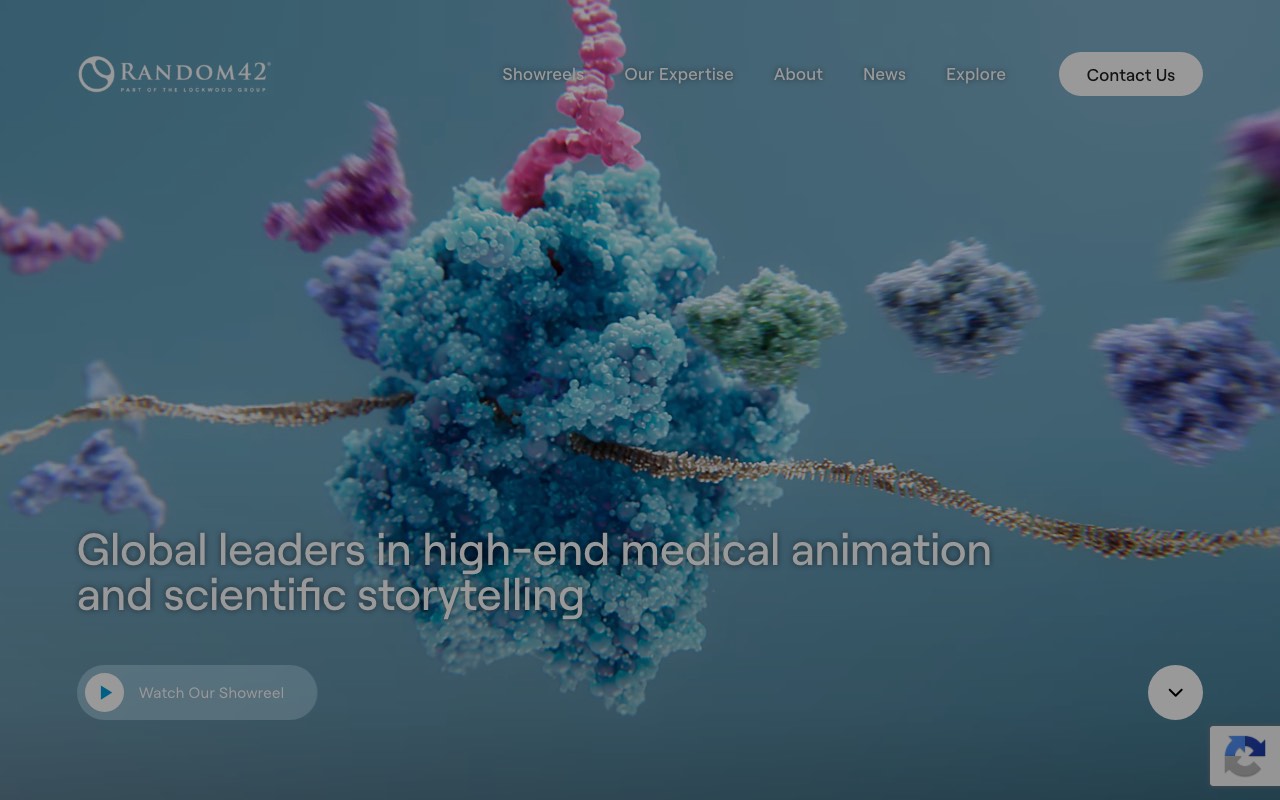
Random42 is the big one. It was founded in London in 1992 and is now part of The Lockwood Group. The site lists more than 70 in-house animators, 3,000+ minutes of animation, and 683 clients. The homepage headline calls it “Global leaders in high-end medical animation and scientific storytelling,” and the showreel backs that up.
Most of its work is pharma. Mechanism of action films, congress experiences, VR journeys inside the body. That is the same craft a device launch needs, and Random42 names medical device manufacturers among its client types. If your device has a biological story to tell, this is the studio that tells it best. Our pharma video marketing guide covers what a mechanism of action video costs and how MLR review changes the workflow.
Key features
- 3D and 2D animation for molecular and whole-body stories
- Virtual, augmented, and mixed reality experiences for congress
- Interactive apps and websites built around the animation
- Imagery and slide decks for the same launch
- A large in-house team, so big programmes do not queue
Pricing: On request. Random42 publishes no rates and no turnaround. Expect the top of the studio range.
Best for: A global launch with a congress presence and a budget to match.
3. Scientific Animations
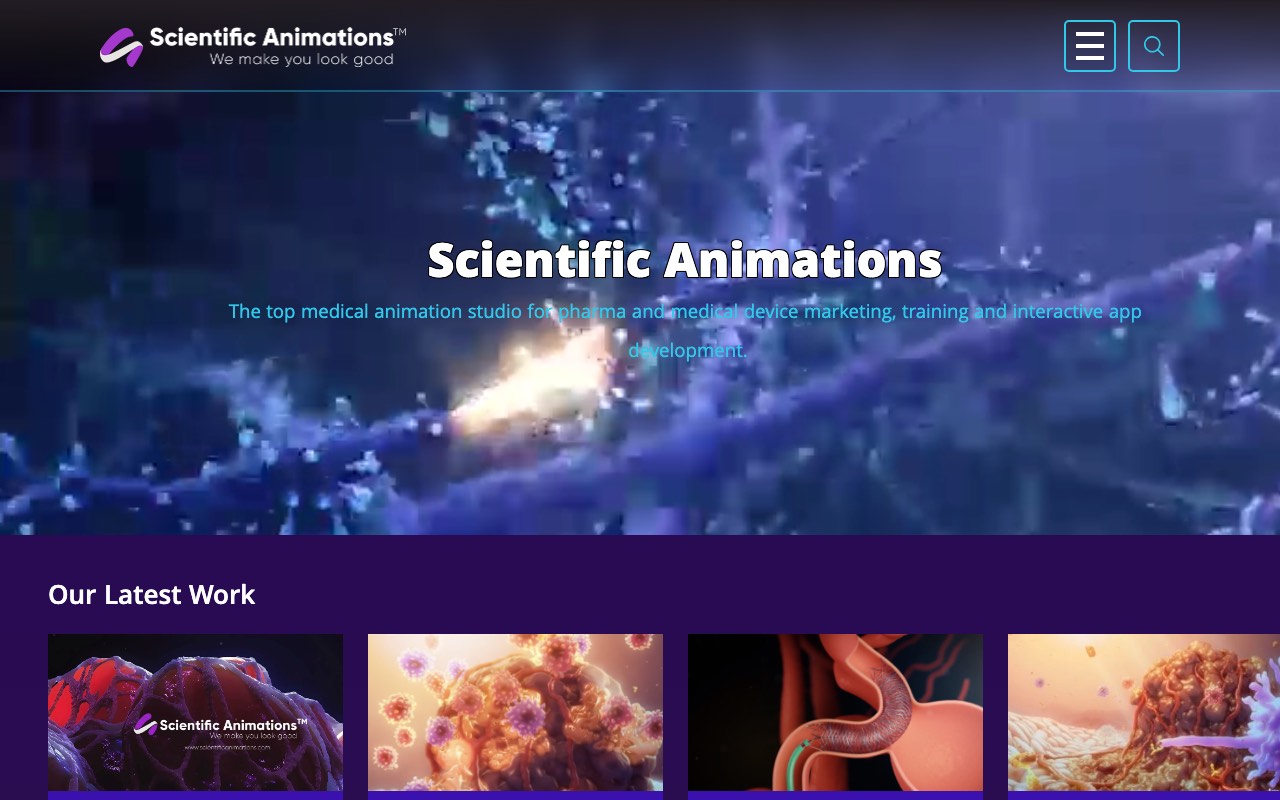
Scientific Animations was founded in 2004 and runs offices in Maplewood, New Jersey, and Tustin, California. Its homepage calls it “the top medical animation studio for pharma and medical device marketing, training and interactive app development.” That is a bold claim. The device procedure work in its portfolio earns it a place here.
It is also the only studio on this list that puts a number on its website. The about page says projects range from $3,000 to $300,000. That spread tells you something useful. A short 2D explainer sits near the bottom, and a full surgical procedure with an interactive app sits near the top.
Key features
- Medical device and procedure animation for surgeons and reps
- Mechanism of action films for pharma and biotech
- VR and AR experiences for congress and training
- Medical illustration for print and slides
- Interactive app development alongside the animation
Pricing: The about page states a project range of $3,000 to $300,000, read in September 2026. No per-minute rate or turnaround is published.
Best for: A mid-size device company that knows its budget and wants a studio that has said its range out loud.
4. Hybrid Medical Animation
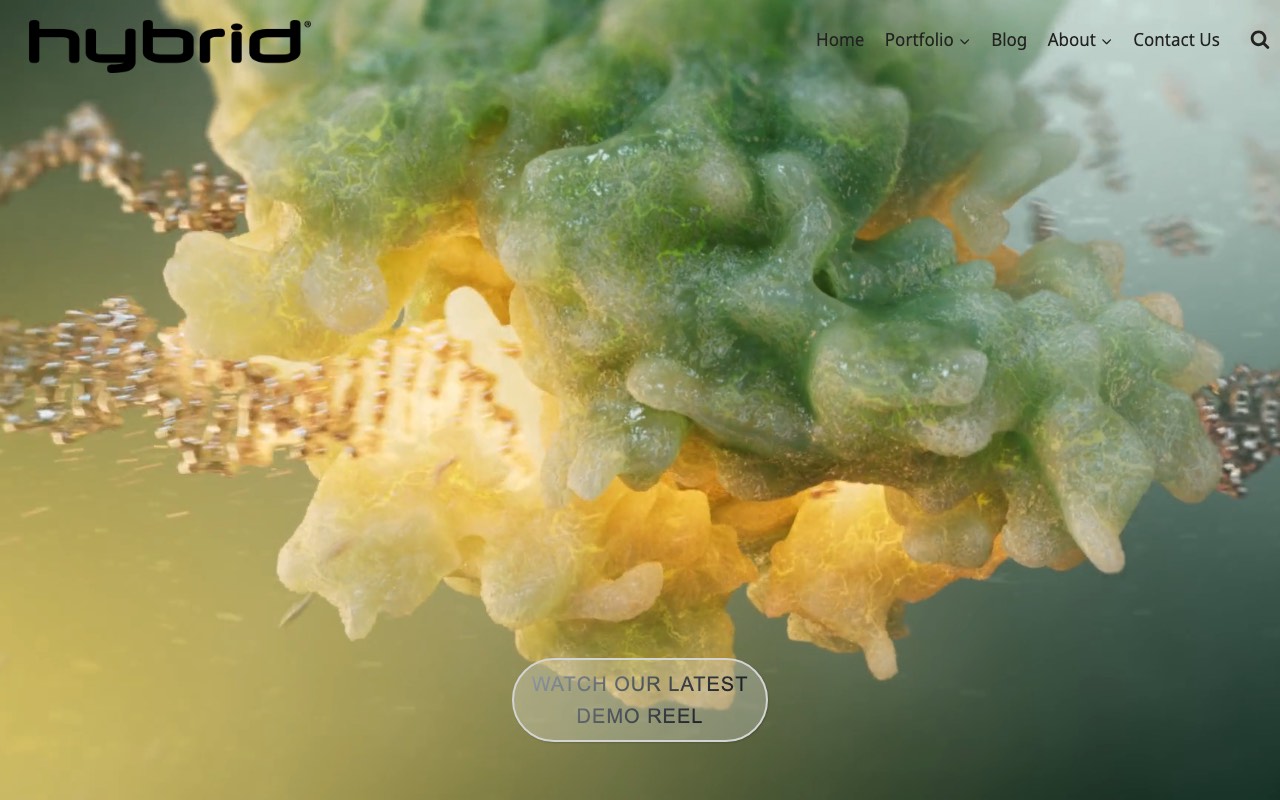
Hybrid Medical Animation has made 3D medical animation from Edina, Minnesota, since 1998. The homepage says it has produced “thousands of animations, illustrations, and interactive experiences.” Its services page lists a dedicated device reel next to its mechanism of action and mechanism of disease work.
We like two things about Hybrid for device work. It keeps voiceover, sound design, motion graphics, and final edit in house, so one studio owns the whole file. And it runs what it calls one of the largest in-house render farms available. That is what makes fast revisions possible on a heavy 3D scene.
Key features
- 3D device animation for HCP and patient audiences
- Mechanism of action and mechanism of disease storytelling
- 3D product photography and medical illustration
- 360, VR, and AR experiences
- Voiceover, sound design, captioning, and final edit in house
Pricing: On request. Hybrid publishes no rates. It mentions rapid turnaround from its render farm but gives no figure.
Best for: A US device team that wants a long-standing studio to own the whole production, including sound and edit.
5. XVIVO
XVIVO is the studio behind The Inner Life of the Cell, the 2006 film that made molecular animation a thing. It was founded in 2001 in Connecticut by David Bolinsky, once the lead medical illustrator at Yale, and Michael Astrachan. Its homepage names Pfizer, Johnson & Johnson, Roche, Moderna, Neuralink, and the NIH among its clients.
XVIVO’s strength is the science story. Mechanism of action, mechanism of disease, and the cellular level of what a device changes. It lays out a six-step process on its site: research, script, storyboard, animatic, rough, and final. That is the process to hold every other studio to.
Key features
- 3D mechanism of action and mechanism of disease animation
- Medical illustration for print and digital
- Interactive touchscreen and web experiences, including VR
- A six-step process published on the site
- Researchers and medical writers on the team, not only animators
Pricing: On request. XVIVO publishes no rates and no turnaround, checked in September 2026.
Best for: A device or biotech team whose product needs the biology explained before the hardware makes sense.
6. InfuseMed
InfuseMed is the training specialist of the group. Founded in 2007 and based in Lehi, Utah, it names Medtronic, Abbott, BD, Edwards, Siemens, Philips, Roche, and Johnson & Johnson as clients. The homepage headline, “Immersive Training That Accelerates Competency and Adoption,” tells you where the money goes. XR environments, interactive simulators, 360 clinical video, and eLearning, with 3D animation in service of all of it.
That makes it the right call when the hard part of your launch is adoption, not awareness. A new procedure that surgeons must learn before they will order the device is an InfuseMed job. A 30-second product film is not what it sells.
Key features
- XR, VR, and AR training environments on its InXR platform
- Interactive simulators and software applications
- 360 and immersive clinical video capture
- 3D medical animation and visualization
- eLearning and trade show experiences
Pricing: On request. InfuseMed publishes no rates and no turnaround.
Best for: Procedural training and adoption programmes for a device that clinicians must learn to use.
7. AITuber (the self-serve option)
AITuber is our product, and it is not a studio. It generates a device video from a written description in the medical template. It is here for one job: the versions around the hero asset. The sales cut for a rep’s tablet. The silent loop for the congress booth. The training walkthrough with each step called out. The same three in every language you sell in.
Its limits come first. There is no CAD or 3D model upload. AITuber draws the device from what you write, so someone who knows the product has to check the geometry on every draft. It makes no interactive formats, and a regulated hero asset should still go to a studio from the list above. An anatomy knowledge pack keeps organs on the correct side and flows moving one way. That is why the surrounding anatomy holds up far better than raw AI video.
The medical template has five fixed styles. Dark Studio puts one lit device on black, the standard device marketing look. X-Ray suits implants against bone. Translucent Body and Realistic 3D show a device in place inside the body. Friendly Cartoon is for patients learning a home device. Pick the narration language in the form and each version comes back narrated and captioned.
Key features
- Device videos generated from a description, no studio brief
- Five medical styles, including Dark Studio and Translucent Body
- Narration language chosen per version
- Anatomy knowledge pack for correct placement and one-way flows
- Every new version is a new draft, not a change order
Pricing: 100 free credits at signup, no card. Images from 1 credit a scene, AI video from 5 credits a second, voice at 30 credits a minute. The Creator plan is $39 a month for 2,500 credits.
Best for: Sales cuts, congress loops, training walkthroughs, and language versions, reviewed by the same people who sign off your other promotional material.
Medical videos made with AITuber
Medical samples in the styles a device video uses. Each one came from a single prompt, and each one still went through review.
When you do not need a company
Generate first when the video has no new claims and no shape that has to be exact. That covers more of your list than you might think.
The rule we use is short. A hero asset that carries regulated claims and shows your exact CAD geometry goes to a studio. Everything else gets generated first, then reviewed. The how-to on making a medical device marketing video walks through the script order, the style for each device, and the review gate.
The savings are not in the credits. They are in the versions that never got made. A studio contract buys one hero. The 30-second sales cut, the booth loop, and the Spanish version are three quotes on top. With a generator, each is another draft from a description your reviewers have already approved.
One more thing to plan for. A generated draft goes through the same regulatory and medical affairs review as any studio film. Get the version with the narrowest claims approved first, then build the others from that approved description. The wider plan, including the clinic side of medical video, is in our medical video marketing guide.
If you are a dental practice or a dental device maker, the roster is different. Our roundup of the best dental video marketing companies covers dental marketing agencies and chairside patient-education vendors instead.
Frequently Asked Questions
Choosing a company
What does a medical device video marketing company do?
It turns your device into a short 3D animation that shows what the device does, where it sits, and how it works. Most companies on this list also write the script with a medical illustrator and build the device from your CAD files. They deliver versions for reps, congress, and training.
How do I choose a medical device marketing video agency?
Ask four questions. Do they build from CAD? Does a medical writer own the script? Can they show a device reel, not only a pharma reel? Will they state their process and timeline before quoting? A yes to all four means the studio is a safe pick.
Which company is best for medical device animation?
Ghost Medical has the strongest device roster on this list, with Stryker, Medtronic, and Abbott among its named clients. Random42 is the pick for a global launch with congress work. Scientific Animations is the only one that publishes a project range.
Cost and timing
How much does a medical device animation cost?
Most studios quote on request. Voka’s price guide puts a medical animation studio at about $5,000 to $20,000 per finished minute. Scientific Animations states a project range of $3,000 to $300,000 on its site, checked in September 2026.
How long does a medical device animation take?
Six to ten weeks is the usual range for a studio. Ghost Medical quotes an average of about 10 weeks to a finished animation. A generated draft takes minutes, and then review takes as long as review takes.
Do medical animation studios publish their prices?
Rarely. Of the six studios here, only Scientific Animations puts a figure on its site. The rest quote each project after a call. Do not trust third-party price trackers for these companies; they guess.
Generating instead
Can AI replace a medical device video company?
For a hero launch asset with exact CAD geometry and regulated claims, no. A studio still wins on geometry and accountability. For the versions around it, the sales cuts, congress loops, training walkthroughs, and language versions, generated video replaces a lot of change orders.
Can I upload my device’s CAD model to AITuber?
No. AITuber draws the device from your description, so the shape will be close without matching. Someone who knows the product should check every frame before it goes anywhere.
Who reviews a generated medical device video?
The same people who sign off your other promotional pieces, usually regulatory and medical affairs. AITuber drafts the explanation. They own the claims.
How we researched this: we reviewed seven medical animation studios for this list and kept the six whose current services, locations, and client types we could confirm on their own websites in September 2026. Nucleus Medical Media was left out because its site blocked our checks, not because of any judgement on its work. Pricing and turnaround figures come only from each studio’s own pages; where a studio publishes none, we say “on request.” The studio per-minute benchmark comes from Voka’s medical animation price guide, and the market figure from Grand View Research. AITuber is our product, so we have said where a studio is the better choice. Prices and offers change; check each site before you sign.