How to Make AI Skeleton Videos (Step-by-Step, Free, 2026)
Step-by-step guide to making AI skeleton anatomy videos for YouTube Shorts. The 'what happens to your body' format pays $10-$25 CPM. Free to start.
You’ve seen them in your feed. A translucent 3D skeleton sits at a kitchen table, drinking coffee. The narrator asks: “What happens to your body if you drink 5 cups of coffee every single day?”
As the skeleton sips, you watch the coffee travel down its esophagus. The stomach glows. The heart speeds up. Caffeine particles race to the brain. Millions of people can’t look away.
These AI skeleton videos are dominating YouTube Shorts, TikTok, and Instagram Reels. Creators are building faceless YouTube channels around skeleton educational shorts and earning thousands per month from YouTube automation. And until recently, making them required stitching together four or five separate AI tools. Not anymore.
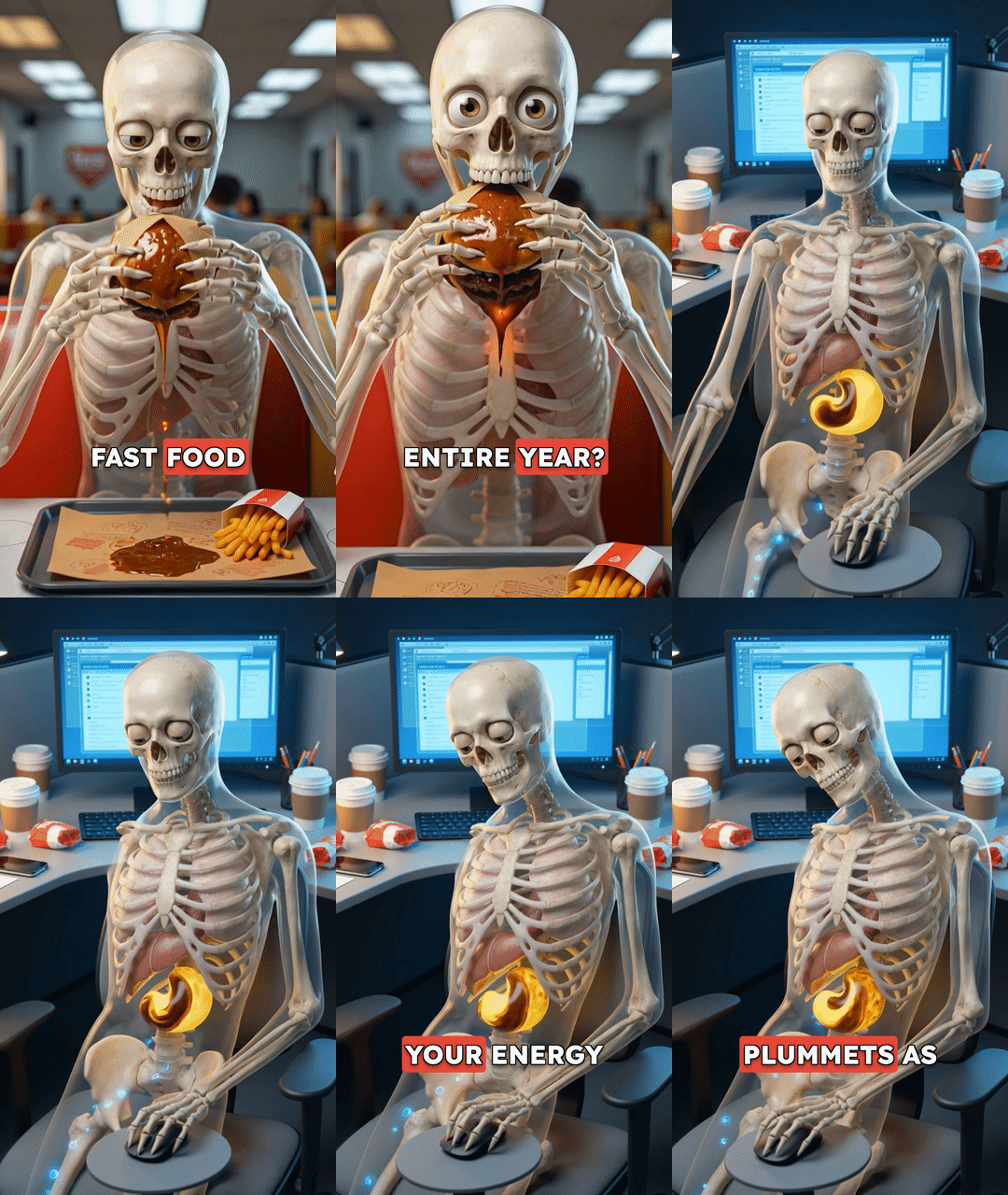
A skeleton anatomy video generated entirely with AI in AITuber. Try it free
This guide shows you exactly how to make skeleton shorts with AI, from idea to published video, in one tool. Need ideas first? Browse 82+ skeleton video ideas or grab ready-to-use prompts.
Why the Skeleton Video Niche Is the Hottest Faceless Format
Faceless YouTube channels have been growing for years. But the skeleton video niche is in a category of its own. Here’s why this format works so well:
The curiosity hook is built in. Every video starts with a question people can’t ignore: “What happens to your body if you never sleep?” or “What happens if you eat only fast food for a year?” The format practically writes its own hooks.
Education content gets premium ad rates. Advertisers pay $2 to $8 CPM for entertainment audiences, but $10 to $25 CPM for education and health viewers on YouTube. That means the same number of views generates 3 to 5 times more revenue. Finance skeleton channels attract the highest-spending advertisers on the platform.
The skeleton character is instantly recognizable. A translucent glass skeleton with oversized cartoon eyes is visually unique. Viewers remember it. They follow. They come back for more.
You never show your face. No camera, no studio, no editing skills. The entire video is AI-generated. One person with a laptop can run a full faceless YouTube channel built around skeleton content. Creators like Yang Mun, who made $300K in 90 days with an AI character, prove that AI-generated faceless content is a real business.
| Factor | Entertainment Channels | Skeleton Video Channels |
|---|---|---|
| Advertiser CPM | $2 to $8 | $10 to $25 |
| Content lifespan | Days | Months (evergreen) |
| Audience intent | Entertainment | Learning |
| Face required | Sometimes | Never |
| Production complexity | High | Low (with AI) |
The “What Happens to Your Body” Format Explained
The most viral skeleton anatomy videos follow a specific storytelling structure. Understanding it is the key to replicating the results.
The Formula
- Hook (0 to 3 seconds): Open with a “what happens to your body if…” question. This is the curiosity trigger that stops the scroll.
- Escalation (3 to 45 seconds): Walk through progressive timeframes. After 1 hour, after 1 day, after 1 week, after 1 month. Each stage shows increasingly dramatic effects on specific organs.
- Climax (45 to 55 seconds): Reveal the most surprising or extreme consequence. This is the moment viewers share.
- Conclusion (55 to 60 seconds): End with an educational takeaway or a surprising reversal that makes viewers want to watch again.
Why It Goes Viral
The format hits three psychological triggers at once:
- Curiosity gap. The question creates tension that can only be resolved by watching
- Visual novelty. Seeing organs glow and react inside a translucent body is genuinely fascinating
- Educational value. Viewers feel like they’re learning something real, which makes them save and share the video
The Old Way: Making Skeleton Videos with 4 to 5 Tools
Until now, creating skeleton videos meant bouncing between a stack of disconnected tools:
- ChatGPT or Claude for writing the script
- OpenArt, Midjourney, or similar for generating skeleton character images
- ElevenLabs for AI voiceover
- CapCut or Premiere for editing, timing, and adding captions
- A reference image tool for maintaining character consistency
Each video meant switching between apps, copying files, managing separate subscriptions, and hoping everything synced correctly. A single 60-second video could take 30 to 45 minutes.
It works. Creators have built real audiences this way. But it’s slow, fragmented, and unnecessarily complicated.
AITuber: AI Skeleton Video Generator, End to End
AITuber’s Skeleton Video mode is an AI skeleton video generator that handles the entire pipeline in one place. No app-switching. No file management. No separate subscriptions for each piece.
Here’s what happens when you create a skeleton video with AITuber:
Step 1: Enter Your Skeleton Video Idea
Type a simple prompt like “What happens to your body if you stop sleeping for 11 days straight.” You don’t need a full script. AITuber’s AI writes one for you, optimized specifically for the skeleton anatomy format.
The AI knows the rules of this niche. It structures the script with proper timeframe escalation, hooks, and anatomically accurate organ descriptions. Every organ reference includes its exact body position so the visuals render correctly.
Step 2: Review and Customize Your Script
AITuber generates a complete script with scene-by-scene breakdowns. Each scene includes:
- Narration text timed to 6 to 7 seconds per scene
- Visual descriptions for the skeleton’s pose, environment, and which organs are highlighted
- Anatomically accurate organ positioning using body landmarks (ribs, sternum, navel, spine)
You can edit anything. Change the wording, adjust the pacing, add or remove scenes. Or just use the AI-generated script as-is.
Step 3: Choose Your Voice
Pick from 1,300+ AI voices in any language. Match the voice to the educational tone of your content. Calm and authoritative works best for anatomy explainers.
Step 4: Generate and Download
Hit generate. AITuber creates the full video: AI-generated skeleton scenes, natural voiceover, perfectly synced captions, and smooth transitions. Download it, or publish directly to YouTube from inside the app.
The entire process takes minutes, not the 30 to 45 minutes of the multi-tool workflow.
Skeleton Video Automation with Autopilot
Here’s where it gets interesting. Skeleton video automation used to be impossible. Every video required manual work across multiple tools. AITuber’s Autopilot feature changes that entirely. It can create skeleton videos for you automatically, on a schedule. For the complete automation setup guide, read How to Automate Skeleton Videos with Autopilot.
Set it up once:
- Pick your niche. Tell Autopilot what kinds of topics to generate (anatomy, body science, health myths, history, stoicism, or any other skeleton video niche)
- Set your preferences. Choose your voice, caption style, and video duration
- Choose a schedule. Daily, every other day, three times a week. Whatever works for your channel
- Let it run. Autopilot generates ideas, writes scripts, creates videos, and queues them for publishing
This means you can maintain a consistent posting schedule without touching the tool every day. The algorithm rewards consistency, and Autopilot handles it for you.
Beyond Anatomy: 10 Skeleton Video Niches That Go Viral
Anatomy explainers are just one use case. The skeleton character can play any role, wear any clothing, and act out any scenario. Here are the highest-potential skeleton video niches beyond body science. For the complete niche ranking with CPM data and competition levels, read Top 10 Skeleton Video Niches.
1. Stoicism and Motivation
A dark, dramatic skeleton delivers philosophical wisdom over cinematic visuals. The skeleton’s association with mortality perfectly matches the stoic “memento mori” (remember you will die) theme. Stoicism faceless channels attract advertisers at $6 to $15 CPM.
Example: “Marcus Aurelius on why suffering makes you stronger”
2. Finance and Money Explainers
Skeleton character explains investing, budgeting, or crypto. Finance is the highest CPM niche on YouTube at $15 to $45 CPM. The skeleton adds visual personality to normally dry financial content.
Example: “What compound interest actually looks like over 30 years”
3. Historical Reenactments
Skeleton acts out moments from history wearing period-appropriate clothing. Medieval battles, the Titanic, ancient Rome. History content attracts advertisers at $8 to $12 CPM with strong evergreen value.
Example: “How medieval knights actually died in battle”
4. Horror and Creepypasta
Skeleton characters in eerie settings narrating scary stories. Horror is one of the highest RPM faceless niches at $8 to $12. Skeletons are inherently associated with the macabre, making this a natural fit.
Example: “What lives in the catacombs”
5. Space and Extreme Environments
What happens to the human body in zero gravity, deep ocean, extreme cold, or the center of the earth. Combines space curiosity with body science for high engagement.
Example: “Your skeleton in space: bones lose density every day”
6. Sports Science and Fitness
Skeleton shows what happens to muscles, bones, and joints during specific exercises. Correct vs. incorrect form through skeletal visualization. Wellness brands pay $7 to $15 CPM.
Example: “What deadlifts actually do to your spine”
7. Psychology and Brain Science
Skeleton explains anxiety, depression, procrastination, or fear through the nervous system. Mental health content gets high engagement from 18 to 35 demographics.
Example: “What anxiety actually does to your body”
8. Food Science and Digestion
The internal journey of food through the digestive system. What specific foods do to your bones and body. Everyone eats, so the content is universally relatable.
Example: “What happens when you eat a cheeseburger (skeleton view)“
9. Animal and Comparative Anatomy
Compare skeleton structures across species. Why giraffes and humans have the same number of neck bones. How a snake’s skeleton lets it move without legs. Family-friendly content with broad appeal.
Example: “Animal skeleton vs. what they actually look like”
10. Mythology and Folklore
Skeleton narrates death-related legends from world cultures. The Grim Reaper, Japanese Gashadokuro, Celtic Ankou. Skeleton characters are literally the subject matter.
Example: “The Japanese skeleton ghost 15x the size of a human”
Revenue Potential: The Numbers Behind Skeleton Video Channels
Let’s break down the actual earning potential for a skeleton video channel.
YouTube Shorts Monetization
YouTube pays creators through the Shorts Revenue Sharing program. Shorts revenue is calculated differently from long-form video ads. YouTube pools ad revenue from Shorts and distributes it based on your share of total Shorts views, with creators keeping 45% of their allocated revenue. Education and health content consistently attracts higher-value advertisers, which translates to better per-view payouts:
| Monthly Shorts Views | Estimated Creator Revenue |
|---|---|
| 1 million | $400 to $600 |
| 5 million | $2,400 to $3,600 |
| 10 million | $6,000 to $10,000 |
| 50 million | $30,000 to $50,000 |
Revenue depends on audience demographics, geography (US/UK viewers generate the highest payouts), and advertiser demand for your niche. Education content generates significantly more per view than entertainment because health, finance, and wellness advertisers bid at $10 to $25 CPM for these audiences.
Beyond Ad Revenue
The biggest money in faceless content comes from stacking multiple revenue streams:
- Digital products. Study guides, health ebooks, wellness courses. These have near-zero production cost and high margins
- Affiliate marketing. Health supplements, fitness apps, educational platforms. Skeleton content attracts an audience that actively buys wellness products
- Brand sponsorships. Health and wellness brands pay premium rates for educational content placement
- Community memberships. Patreon or paid communities for viewers who want deeper educational content
Content Strategy for Skeleton Video Channels
Creating the videos is only half the equation. Here’s how to build a channel that actually grows.
Topic Selection
The best performing skeleton educational shorts fall into several categories:
- Extreme habits. “What happens if you drink 10 energy drinks a day” or “What happens if you eat only ramen for a year”
- Common curiosities. “What happens to your body when you sleep” or “Why your stomach growls when you’re hungry”
- Historical scenarios. “What happens to your body on the Titanic” or “How gladiators survived in ancient Rome”
- Hypothetical extremes. “What happens if you fall into a black hole” or “What if all your bones disappeared”
- Finance and motivation. “What compound interest does over 30 years” or “Stoic wisdom on facing failure”
Posting Strategy
| Platform | Frequency | Format |
|---|---|---|
| YouTube Shorts | Daily | 30 to 60 second vertical videos |
| TikTok | Daily | Same content, cross-posted |
| Instagram Reels | 3 to 5x per week | Best-performing Shorts repurposed |
| Facebook Reels | 3 to 5x per week | Same content, cross-posted |
Optimization Tips
- First 3 seconds decide everything. Your hook must create an irresistible curiosity gap. “What happens to your body if you…” is proven, but test variations
- End with a question or surprise. This drives comments, which signals engagement to the algorithm
- Use trending audio cues. Background music that matches the educational tone helps retention
- Post at consistent times. The algorithm learns your schedule and promotes accordingly
- Repurpose across platforms. One video, four platforms. Multiply your reach from a single production
AI Skeleton Video Maker: AITuber vs. The Multi-Tool Workflow
Here’s how the two approaches compare when choosing a skeleton video maker. For a full breakdown of all 7 tools, read Best AI Tools for Skeleton Videos in 2026.
| Multi-Tool Workflow | AITuber | |
|---|---|---|
| Tools required | 4 to 5 separate apps | 1 |
| Time per video | 30 to 45 minutes | A few minutes |
| Script writing | Manual (ChatGPT + copy/paste) | Built-in AI, niche-optimized |
| Character consistency | Manual reference management | Automatic (reference image locked) |
| Voiceover | Separate ElevenLabs account | Built-in, 1,300+ voices |
| Captions | Manual in CapCut/Premiere | Automatic, synced |
| Anatomical accuracy | Depends on your prompting skill | AI-optimized with organ positioning |
| Scheduling/automation | Not possible | Autopilot mode |
| Monthly cost | $50 to $100+ (multiple subscriptions) | Single subscription |
Getting Started: Your First Skeleton Video in 5 Minutes
Here’s the fastest path to your first skeleton video:
- Go to AITuber and open the Skeleton Video template
- Type a prompt. Start with something proven: “What happens to your body if you stop sleeping entirely for 11 days straight”
- Let AI write the script. Review the generated scenes. Each one includes anatomically accurate organ descriptions and visual directions
- Pick a voice. Choose a calm, authoritative voice that fits the educational tone
- Generate. AITuber handles everything: skeleton visuals, voiceover, captions, and assembly
- Download or publish. Export the finished video, or publish directly to YouTube
That’s it. Your first skeleton video is done.
Want to scale? Set up Autopilot and let it create new videos automatically on your schedule.
Frequently Asked Questions
What are skeleton anatomy videos?
Skeleton anatomy videos are short-form educational content featuring a 3D translucent skeleton character. The skeleton acts out everyday scenarios while a narrator explains what happens inside the body. The “what happens to your body if…” format is the most popular variation, pulling millions of views on TikTok, YouTube Shorts, and Instagram Reels.
How much do skeleton anatomy videos earn?
Education and health content attracts advertisers paying $10 to $25 CPM on YouTube, which is 3 to 5 times higher than entertainment. A channel with 10 million monthly Shorts views can generate $6,000 to $10,000 from ads alone. Stacking digital products, affiliates, and sponsorships can push monthly revenue to $15,000 or more.
How do I make skeleton shorts with AI?
Open AITuber’s Skeleton Video template, type an idea (like “what happens to your body if you stop sleeping”), and the AI writes a niche-optimized script. Pick a voice from 1,300+ options, hit generate, and AITuber creates the full video with skeleton visuals, voiceover, and captions. The entire process takes a few minutes.
Do I need editing skills to make skeleton videos?
No. With AITuber, the entire process is handled by AI. You enter an idea, the AI writes an optimized script, generates skeleton visuals, adds voiceover and captions, and produces the final video. No video editing required.
Can I automate skeleton video creation with AI?
Yes. AITuber’s Autopilot feature is built for skeleton video automation. It generates skeleton videos automatically on a schedule. Set your niche, voice, and posting frequency, and Autopilot handles idea generation, script writing, and video creation without manual intervention.
What makes skeleton videos different from other faceless content?
Three things: visual uniqueness (the translucent skeleton is instantly recognizable and shareable), educational value (viewers feel like they’re learning real anatomy), and premium monetization (health and education content attracts significantly higher CPM than entertainment). The combination of novelty, education, and earning potential makes this one of the most attractive faceless niches in 2026.
Do skeleton videos only work for anatomy topics?
No. While “what happens to your body” is the most viral format, the skeleton character can play any role. Historical reenactments, stoic philosophy, finance explainers, horror stories, space science, food digestion, and mythology all work as skeleton video niches. The skeleton simply wears appropriate clothing for non-anatomy topics (a suit for business scenarios, armor for battle scenes, casual clothes for everyday situations).
What tools do I need to make skeleton TikTok videos?
With the traditional workflow, you need 4 to 5 separate tools: ChatGPT for scripts, an AI image generator for skeleton visuals, ElevenLabs for voiceover, and CapCut for editing. With AITuber, you need just one tool. It handles script writing, skeleton video generation, voice synthesis, and caption syncing in a single platform.
Is it too late to start a skeleton video channel?
No. The format is still growing rapidly and is far from saturated. Unlike many faceless niches that are flooded with identical content, skeleton videos have a distinctive visual style that stands out. Early movers in this niche have a significant advantage as the format continues to trend across platforms.
How long does it take to make one skeleton video?
With the traditional multi-tool workflow (ChatGPT + image generator + voice tool + video editor), each video takes 30 to 45 minutes. With AITuber’s AI skeleton video generator, the same video takes a few minutes from idea to finished download.
How much does it cost to start a skeleton video channel?
You can start creating skeleton videos with AITuber’s free tier. Paid plans start at $19/month and include credits for multiple videos. Compare that to the multi-tool workflow where you’d pay $10 to $30 for each separate tool (totaling $50 to $100+/month).
Revenue estimates in this article are based on publicly available YouTube CPM data for education and health content. Individual results vary based on content quality, consistency, niche selection, and audience engagement. We share these numbers to illustrate the opportunity, not to guarantee earnings.